
Gamo Zone: An Overview
Gamo Zone is a remarkable administrative zone located within the South Ethiopia Regional State, widely celebrated for its ancient culture, breathtaking natural beauty, and highly fertile lands. Detailed information regarding the zone is presented below.
- Geography and Climate
- Location: Gamo Zone is situated in the South Ethiopia Region. It borders Wolaita Zone to the north, South Omo Zone to the south, Gofa Zone to the west, and Lakes Abaya and Chamo to the east.
- Topography: The landscape of the zone is exceptionally diverse. It features the majestic Mt. Guge, which reaches an elevation of up to 4,207 meters above sea level, contrasting sharply with the low-lying, warm plains surrounding Arba Minch Zuria.
- Climate: Due to this vast altitudinal variation, the zone experiences three distinct climatic zones: Dega (highland), Weyna Dega (midland), and Kolla (lowland). This natural endowment makes the soil remarkably fertile and perfectly suited for cultivating a wide variety of crops and fruits.
- Administration and Capital
- Arba Minch: The city originally derived its name from its remarkable natural gift, the “Forty Springs”. Its unique geographical charm is further enhanced by being nestled between two massive Rift Valley lakes, Abaya and Chamo. Leveraging this strategic geography, the city has continuously grown to become the primary political and administrative center of the zone today. The combination of these rich natural blessings and its established administrative framework enables the city to serve as a premier tourism destination and a thriving commercial hub in southern Ethiopia.
- Population and Culture
- Ethnic Composition: The zone is a multicultural home to the indigenous Gamo, Zayse, and Gidicho ethnic groups, alongside various other nationalities who have coexisted harmoniously with love, unity, and mutual respect since ancient times.
- Language: The Gamo, Zayse, and Gidicho languages are widely spoken across the zone, each reflecting the distinct identity of its community. These mother tongues serve as vital vessels for transmitting the community’s history, culture, and ancestral wisdom from generation to generation. Amharic also serves as the official working language within the zone.
- Social Structure: The indigenous communities particularly the Gamo people possess a resilient, unbroken social structure passed down through generations. This has earned the society widespread recognition for its peaceful lifestyle, deep-rooted commitment to communal solidarity, and exceptional dedication to environmental conservation.
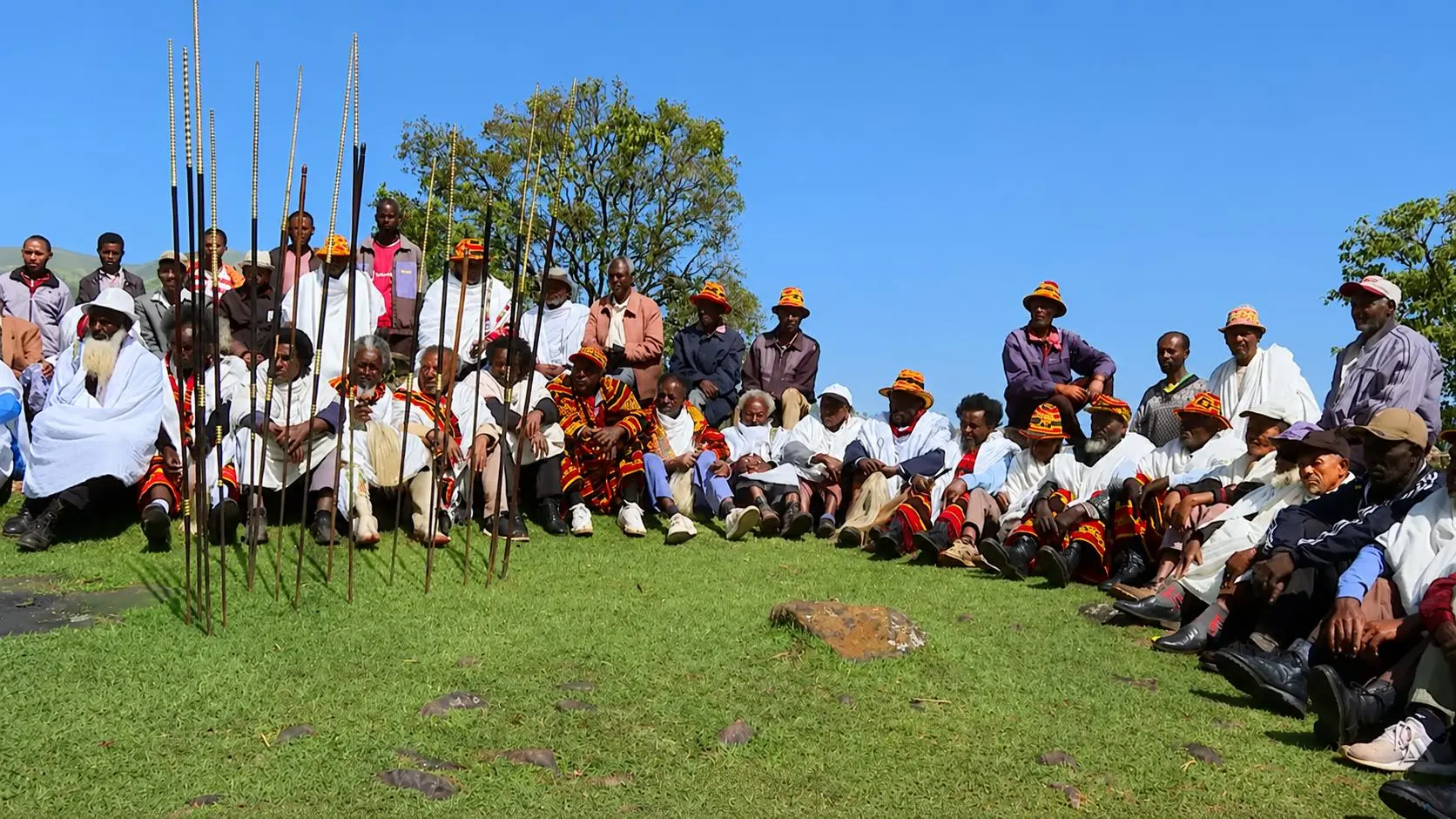
- Dubusha: Integral to this historical social framework is the Dubusha, a traditional public square used for community gatherings, dialogue, and collective decision-making. Managed by respected community elders and guided by traditional customary laws (Woga), these squares are revered as sacred spaces where local disputes are resolved, justice is administered, and peace is restored.
- The Art of Weaving: Alongside their unique social systems, the Gamo people (most notably the Dorze community) possess a highly sophisticated, world-renowned heritage of traditional weaving. They lead the nation in producing premium-quality cultural cotton garments, such as the Kuta and Netela, which are highly sought after throughout Ethiopia.
- Economy and Agriculture
Blessed with abundant natural resources and an exceptionally favorable agricultural environment, Gamo Zone can accurately be described as the “Fruit Basket of Ethiopia.” The core elements of the zone’s economy and agriculture include:
- Fruit Production: Bananas, mangoes, papayas, and avocados are cultivated in massive quantities and at premium quality. In particular, the uniquely flavorful and high-quality “Arba Minch Banana” commands immense reputation and high demand across the entire country.
- Cash and Industrial Crops (Cotton): High-grade cotton is extensively cultivated in the lowland areas of the zone. This produce serves as a primary source of income for local farmers, acts as the foundational raw material for the area’s famous weaving trade, and supplies Ethiopia’s textile industries.
- Enset Cultivation (False Banana): In the highland regions of the zone, Enset is the cornerstone of food security. The community traditionally processes this resilient plant to produce staples like Kocho and Bulla, which are central to a variety of beloved cultural dishes.
- Fisheries Development: Alongside agriculture, the thriving fish harvests gathered from Lakes Abaya and Chamo serve as an essential economic pillar, supporting both local livelihoods and national commercial fish markets.
- Culture and Society
Gamo Zone possesses a vast repository of both tangible and intangible heritage spanning centuries. The following are the prominent cultural expressions, festivals, and institutions:
- Dorze Cultural Village (A Living Cultural Destination): This village is a major national and international tourist attraction. It is famous for the community’s extraordinary weaving skills, their unique traditional huts constructed in the shape of an elephant’s head, and their distinct cultural cuisine prepared from the Enset plant (Kocho).
- Dubusha (Traditional Democracy Squares): The Dubusha represents the centuries-old cultural, democratic, and administrative heritage of the community. It is a historical and sacred open-air assembly where people gather under the guidance of community elders and customary laws (Woga) for public debates, judicial matters, and major communal resolutions. Notable among these historic sites are the Goza Dubusha, Dalbanta Gata, and Choyta Dala Dubusha, among others.
- Ethnic New Year Festivals: The indigenous communities of the zone celebrate their own vibrant traditional New Year festivals. Prominent examples include “Yoyo Masqala” of the Gamo people, “Budo Keso” of the Zayse, and “Bala Kadabe” of the Gidicho. These festivals are profound cultural expressions where peace, love, forgiveness, and unity are magnificently celebrated.
- Gamo Zone Cultural Center: This institution stands as the premier center dedicated to researching, preserving, and showcasing the history, identities, cultural artifacts, and heritage of the zone’s diverse nationalities under one roof for future generations.
- Tourism and Attractions
Gamo Zone houses a wealth of natural, man-made, historical, and religious tourist attractions that make it a highly preferred destination for domestic and international travelers alike. The primary destinations are categorized as follows:
6.1. Natural Attractions and National Parks
The Nechisar National Park
- Introduction and Area: Located 507 km south of Addis Ababa and directly east of Arba Minch city, this park was established in 1974 and covers an area of 514 square kilometers. It derives its name (“White Grass”) from the scenic plains covered in grass that transforms into a striking white color during the dry season.
- Landscape and Ecosystem: Situated within the Great East African Rift Valley, the park encompasses Lakes Abaya and Chamo, the spectacular land bridge known as the “Bridge of God,” the vast Nechisar plains, the forty natural springs, and the expansive groundwater forest below the city. It contains 6 of the 10 distinct ecosystems found across Ethiopia and is home to over 1,000 plant species.
- Biodiversity Resources: The Park harbors approximately 20% of Ethiopia’s total wildlife biodiversity. It hosts more than 91 mammal species (including Burchell’s zebra, crocodiles, hippos, leopards, lions, and the endangered Swayne’s Hartebeest). Furthermore, it is a vital sanctuary for over 340 bird species, including three rare species: the Thick-billed Raven, the Wattled Ibis, and the Nechisar Nightjar.
- Tourism Products: The location is prime for wildlife safaris (game driving), migratory bird watching, boat safaris on the lakes, nature walks through the dense groundwater forest, and professional wilderness photography/filmmaking.
The Maze National Park
- Introduction and Area: Situated between the Gamo and Gofa zones, this beautiful park lies 460 km southwest of Addis Ababa and 198 km from Arba Minch. Officially designated as a national park in 2005 (1997 E.C.), it spans an area of 202 square kilometers. It is named after the Maze River, which flows through the park into the Omo River; in the Gamo language, “Maze” signifies “Full.”
- Landscape and Ecosystem: Sitting at an altitudinal range of 1,000 to 1,200 meters above sea level, the park features stunning terrains and diverse water bodies. It is divided into four primary ecological zones: savanna grasslands, shrublands, riverine forests, and scattered deciduous broad-leaved woodlands, altogether sheltering over 80 documented plant species.
- Biodiversity Resources: Maze is globally significant as one of the few remaining primary sanctuaries for the endangered, endemic Swayne’s Hartebeest. It also hosts 39 species of large and medium-sized mammals (such as lions, leopards, cheetahs, hyenas, lesser kudus, waterbucks, and bushpigs), various reptiles, and 196 distinct bird species.
- Tourism Products: The park is highly ideal for Swayne’s Hartebeest tracking, mammal safaris, bird watching, wilderness trekking along the Maze River, landscape appreciation, and wildlife photography/filmmaking.
Mount Guge
- Nomenclature and Stature: The name “Guge” is derived from the Gamo word for “Head” or “Peak.” The mountain serves as the structural backbone for the expansive Gamo highlands stretching from north to south. Rising to an impressive 4,207 meters above sea level, it stands as the 4th highest mountain in Ethiopia and is locally revered as the majestic “King of Mountains.” Due to its immense altitude, it is routinely draped in white clouds and a lush green mantle.
- Ecological Role and Location: Located in the Daramalo Wereda of Gamo Zone (20 km from Wacha town), this highland massif serves as a critical watershed. It feeds several crucial rivers flowing eastward into the Rift Valley lakes (such as the Kulofo and Hare rivers) as well as those flowing westward into the Omo River basin (such as the Maze and Zage rivers).
- Historical and Cultural Values: Beyond its geographic grandeur, the mountain integrates profound cultural and historical layers. Most notable among these are the ancient Eli Gabriel Monastery, the Sode Dere annual Choye Meskel celebration site, and the unique, preserved lifestyle of the highland Gamo communities.
- Tourism Products: Currently, the mountain offers an unmatched destination for panoramic ridge trekking. Key tourism activities include mountaineering (hiking), visiting the cascading Toshke Twin Waterfalls, high-altitude mountain camping for mental and spiritual rejuvenation, and cultural/religious immersive tourism.
The Dorso Waterfall
- Overview and Landscape: Located in the Chencha Wereda of Gamo Zone, this stunning waterfall is a mesmerizing natural attraction that perfectly exemplifies the ecological beauty and successful community conservation of the region.
- Natural Scenery: Surrounded by a dense canopy of indigenous trees and medicinal plants, the waterfall bestows a lush, vibrant green aesthetic unto the locality. It is highly characterized by its crystalline waters and the serene, untouched natural silence of the surrounding valley.
- Tourism Products: Eco-trekking through the highland forests, waterfall viewing and acoustic relaxation, endemic bird and small forest mammal watching, and environmental eco-tourism research.
The Gezha Protected Forest
- Introduction and Area: Situated within the Gerese Town Administration (specifically across the Tazazie and Gorate kebeles), this forest is located 56 km from Arba Minch city. It rests at an altitude of 3,000 meters above sea level and spans 394 hectares. It is named after the pristine Gezha River that cuts through it. The forest is an exceptionally beautiful destination fusing natural and community-managed forestry values.
- Natural Scenery: The forest protects centuries-old indigenous trees, rare medicinal flora, and the breathtaking Sisote Waterfall. It acts as an invaluable sanctuary for a diverse range of forest birds and wildlife.
- Ecological Services: This protected ecosystem plays a vital life-sustaining role by preventing soil erosion, regulating the local microclimate, protecting biodiversity from degradation, and serving as the primary catchment area for the Gezha River and numerous natural springs.
- Tourism Products: The forest possesses excellent potential for the development of eco-resorts and eco-lodges. Current tourism offerings include forest trekking, guided tours to the Sisote Waterfall, bird watching, nature photography/filmmaking, and specialized scientific research into traditional herbal medicine and conservation forestry.
Lakes Abaya and Chamo
- Introduction and Location: These are two massive, internationally renowned Rift Valley lakes situated adjacent to Arba Minch city. They are divided by the extraordinary, narrow land bridge famously known as the “Bridge of God.”
- Natural Scenery: Lake Abaya is characterized by its large surface area and a distinct reddish-brown color caused by suspended sediments, while Lake Chamo is celebrated for its clear blue waters and immense aquatic biodiversity. Most notably, Lake Chamo hosts the world-famous “Crocodile Market,” a unique natural shoreline spectacular where giant Nile crocodiles, pods of hippopotamuses, and massive flocks of water birds (such as pelicans and fish eagles) gather in close proximity.
- Tourism Products: Exceptional boat safaris, close-range crocodile and hippo viewing, aquatic bird watching, sport fishing, and stunning Rift Valley sunset viewing.
6.2. Historical and Religious Sites
Beyond its wealth of natural wonders, Gamo Zone boasts a deeply rooted historical and spiritual heritage reflected across several ancient destinations:
The Birbir Maryam Monastery
- Overview: As one of the oldest and most significant spiritual centers in the zone, this monastery possesses an ancient historical foundation. It serves as a living treasury, safely preserving numerous archaic religious relics, ancient illuminated parchment manuscripts (Brana), and sacred historical artifacts that date back centuries.
- Tourism Products: Religious and spiritual pilgrimage tourism, heritage viewing, and historical/theological research.
The Eli Gabriel Church
- Overview: Located in the close vicinity of Mt. Guge, this ancient church is an immensely revered and prominent spiritual landmark within the zone. It maintains a deep historical connection with the lineage of the local population and the cultural fabric of the Gamo highlands. During its annual feast days, the site becomes a vibrant stage for spectacular traditional horse-riding displays and unique cultural pageantry.
- Tourism Products: Cultural and religious tourism, high-altitude spiritual retreats, and witnessing traditional equestrian festivals.
The Mota Cave
- Introduction and Location: Situated in the Boreda Wereda of Gamo Zone, this natural cave possesses monumental historical and archaeological significance. The cave’s cold, dry microclimate has played a miraculous role in perfectly preserving ancient biological materials for millennia.
- Scientific and Archaeological Breakthroughs: During an archaeological excavation conducted in 2012 (2004 E.C.), researchers discovered a 4,500-year-old human skeleton. The DNA extracted from this skeleton enabled scientists to map the first-ever complete ancient human genome sequence from the African continent. This genetic profile was named “Bayra” (meaning “First-born” in the Gamo language), providing landmark global data regarding the origins, composition, and massive migration patterns of ancient African populations and their historical mixing with Eurasian populations.
- Historical Significance: The discovery of ancient stone tools, pottery fragments, and preserved animal and plant remains inside the cave provides definitive evidence that agriculture and animal husbandry were practiced in this region over 2,000 years ago. Evidence indicates that throughout history, the cave served multiple functions spanning from an ancient burial site and a permanent dwelling to a strategic defensive shelter during periods of conflict.
- Tourism Products: Premier archaeological and historical heritage tourism, scientific research expeditions, and spelunking (cave exploration).