
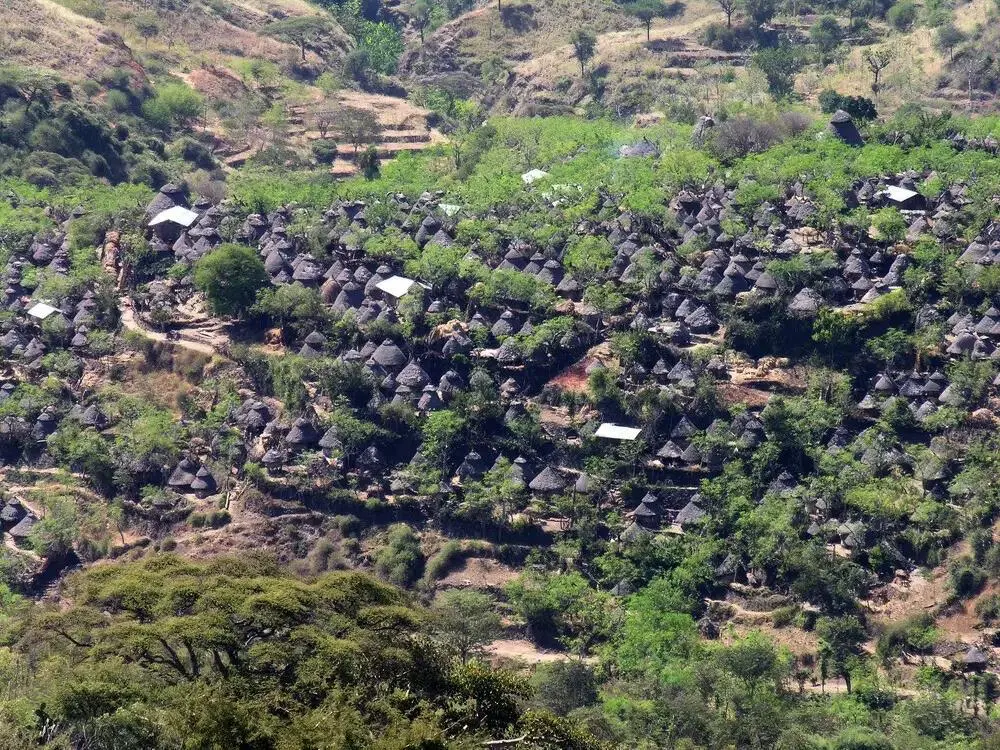
Konso Zone
Konso Zone is located in the Southern Ethiopian Region and is known for its unique and ancient agricultural and cultural system, which has been registered as a UNESCO World Heritage Site.
Key information about the Konso Zone is presented in detail below:
- Location and Administration
- Region: It is located in the Southern Ethiopian Region.
- Capital: The administrative center of the zone is Karat.
- Boundaries: It borders Oromia Region (Borena Zone) to the south, Gamo Zone to the north, and South Omo Zone to the west. The area has a mostly semi-arid climate.
- UNESCO World Heritage Site
Konso Zone was registered as a World Heritage Site by UNESCO in 2011 under the name “The Konso Cultural Landscape”. The main reason for this registration is the intelligent responses of the people to the challenges of the area.
- Stone-Walled Terraces: The Konso people have used massive stone terraces for thousands of years to prevent soil erosion, conserve water, and make the high mountain terrain suitable for farming. This agricultural system is a testament to the Konso people’s great civil engineering skills.
- Fortified Villages: Villages are surrounded by ancient stone walls and fortifications for security. This way of life reflects the Konso’s social cohesion and culture of coexistence.
- Culture and Social Structure
- Waga: The Konso place wooden statues on the graves of deceased leaders or heroes. The “waga” represents the deceased’s identity, wealth, and heroic deeds, and is a central feature of Konso culture.
- Poha System: The Konso have a generation-set system of governance. Under this system, power is passed from one generation to another every few years.
- Collective labor: The construction of stone terraces and the fortification of villages are mainly carried out by the collective labor of the community. This is a testament to the culture of cooperation and support of the Konso people.
- Economy and Agriculture
- Agriculture: The Konso people are mainly engaged in intensive dry farming. The main crops grown on the stone terraces are sorghum, cotton and other drought-resistant crops.
- Trade: The zone is located on the routes leading to South Omo and Oromia (Borena), making it convenient for trade. The trading center known as Key Afer is located nearby and is a major market where neighboring ethnic groups (Hamer, Ari, Bena) meet.
- Main handicrafts
The Konso people are known for their hard work and traditional skills, and a variety of unique products can be found on the market:
- Weaving – Clothing:
- Buluko: This is a thick cotton garment (like a blanket or a robe) that is characteristic of the Konso. It is unique in its strength and color scheme (especially the extensive use of black, red and white).
- Traditional fabrics: Other cotton garments and women’s dresses are available.
- Woodwork and carving:
- Waka figures: Small Waka statues and decorations made for tourists.
- Wooden chairs: Traditional wooden chairs and household items.
- Agricultural tools and implements:
- Plows: Traditional agricultural tools used in Konso terrace farming.
- Pottery: Various clay products used for cooking and serving food.
- Social and Cultural Exchange
- Liveliness: The market is a great place to observe the social life of the Konso. Different ethnic groups, their customs and clothing come together in one place.
- Bargaining: Bargaining is common in the market and is seen as a cultural practice by tourists.
- Traditional Konso Foods and Drinks
- Kurkufa – The Konso’s staple food
Kurkufa is a central food that reflects the Konso’s strong agricultural culture and the art of using nature.
- Spices and Preparation
- Main Ingredients: The main base is made from sorghum or corn flour. The Konso eat mainly legumes, of which corn is the most important.
- Key Ingredient – Moringa: Kurkufa is different from other Ethiopian dishes in that it is prepared with the leaves of the Moringa/Halako plant. Moringa is a superfood that plays a vital role in maintaining the health of the Konso people.
- Preparation: After adding gram flour and moringa leaves, the dough is kneaded (or kneaded) into soft, round balls and steamed or cooked in a small amount of water.
- Cultural and social significance
- Daily food: Kurkufa plays an important role in the daily diet of the Konso people.
- Energy: The Konso people need a high-energy food due to their hard work on the terraces. Kurkufa fulfills this role well.
- Presentation: Kurkufa is often accompanied by special dishes (cabbage or beans), and is sometimes eaten plain.
- Cheka – Traditional drink and food
While Cheka is common in many parts of southern Ethiopia, Konso Cheka is known for its unique preparation and thick consistency.
- Spices and preparation
- Ingredients: It is mainly made from sorghum or corn grains.
- Preparation: After the grains are ground, cooked, and cooled, they are fermented for several days.
- Content: Chaka is thick, opaque, and has a moderate alcohol content. It is usually served in wide-necked clay pots (kaskar) and is covered with a wide straw.
- Cultural and social significance
- Social drink: Chaka is the center of social interaction for the Konso community. It is widely served at festivals, weddings, funerals, and other gatherings.
- Labor value: People who participate in the traditional labor exchange system (Mekena or Dabos) are paid part of their labor in chaka.
- Cuisine: Chaka is so thick that it is used not only as a drink but also as a liquid food.
Overall, the Konso zone is an Ethiopian treasure that has remained unchanged for thousands of years, combining a remarkable culture, human ingenuity in nature, and ancient engineering.