
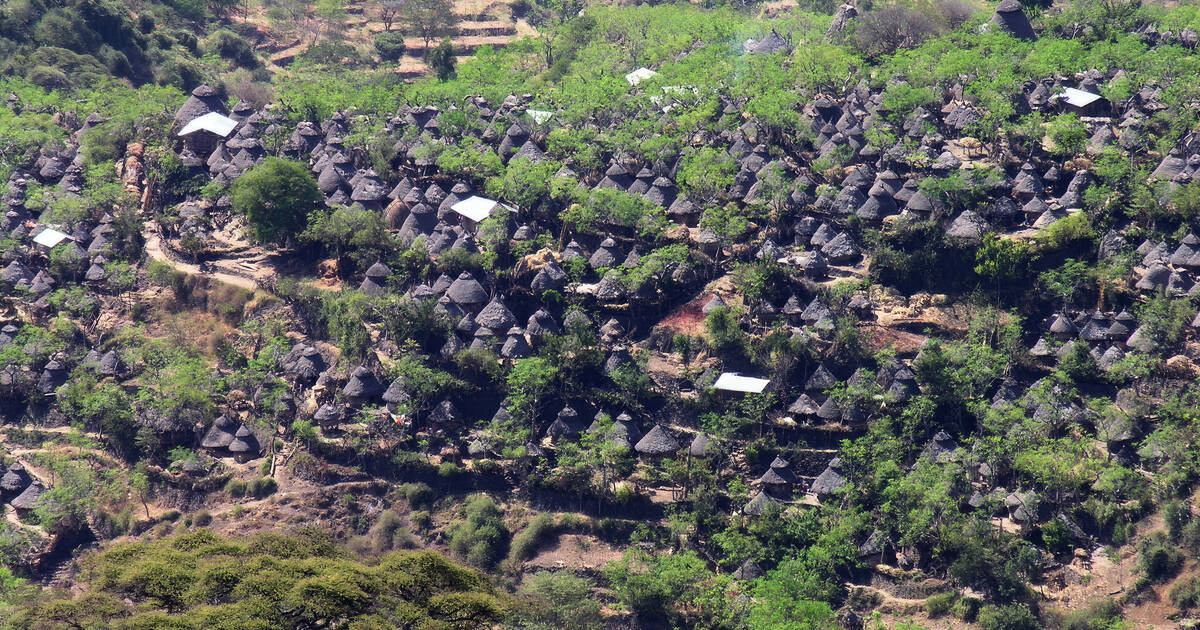
Detailed Explanation of Amba Villages (Kanta)
The settlement culture of the Konso people is primarily based on fortified stone-walled villages (Amba) built on high-altitude hilltops.
These walled villages possess unique characteristics. They are surrounded by massive stone walls up to six meters high, with designated gates for entry and exit. The primary purpose of these stone walls was defense against wild animals and enemy attacks. Inside the villages, residential houses are built very close together, separated by narrow pathways. This layout showcases the indigenous engineering of the Konso people. While there are numerous walled villages in the Konso Zone, only twelve are inscribed as UNESCO World Heritage sites.
1. Strategic Location
- High Altitudes: Villages are built on high hills and mountain peaks to defend against enemy attacks and keep watch over the surrounding area.
- Defensive Walls: Each village is surrounded by massive stone walls called Kata. These dry-stone walls are constructed without any cement or mortar and can reach heights of up to 6 meters.
The Konso are known not only for their heritage preservation but also for their traditional administrative systems. These fortified villages are major tourist attractions that generate local revenue. Cultural preservation is sustained through community cooperation and unity, enabling the Konso to maintain the traditions that earned them a place on the UNESCO World Heritage list.
2. Inside the Village
- Narrow Paths: Paths inside the villages are extremely narrow. This defensive design prevents intruders from moving freely, making them easy targets for residents.
- Gates: The villages have a limited number of narrow entrance gates. These gates are reinforced and secured with heavy wooden logs at night.
- Residential Houses: Houses are circular in design with thatched roofs and are built in close proximity to one another, reflecting the community’s tight social cohesion.
3. Social Spaces
Mora (Public Assembly Halls)
In Konso culture, a Mora is a public pavilion or community center where residents gather for social, cultural, and political purposes. It is a thatched-roof structure that is open on all sides, and it can be found in every traditional Konso village.
The Role of the Mora:
The Mora is a place where villagers discuss social issues, debate new ideas, and resolve disputes. It serves as a court where cultural elders perform reconciliation ceremonies. At night, young men gather at the Mora to guard the village and listen to elders pass down oral histories, culture, and civic duties. It also hosts various cultural performances, dances, and social festivals.
Olahita (Generation Pole)
An Olahita is a traditional juniper pole that symbolizes generations and the transfer of power in Konso culture. Every 18 years, when a new generation transitions into adulthood and assumes leadership responsibilities, a new pole is erected in the central public square (Mora).
- Cultural and Historical Meaning: When one generation peacefully hands over administrative responsibility to the next, they carry the Olahita pole on their shoulders to the central square for a dedication ceremony.
- Dating the Village: By counting the number of Olahita poles standing in the central Mora, one can determine the approximate age of a village . For example, if there are 10 poles, the village is roughly 180 years old. This tradition showcases a peaceful, conflict-free democratic succession system.
4. Stone Terraces
The spectacular stone terraces surrounding the villages are used for both residential and agricultural purposes. In addition to preventing soil erosion, these terraces retain moisture during the rainy season, contributing to the greenness and environmental sustainability of the area.
5. Cultural Significance
The walled villages serve as a living school, demonstrating how the Konso people integrate collective security, environmental conservation, and structural engineering. To this day, the residents continue to practice their ancient traditions within these villages.
Important Tips for Travelers
- Footwear: Because the villages are steep and rocky, wearing comfortable, sturdy hiking shoes is highly recommended.
- Guides: The meanings behind Konso culture and symbols are deep and complex. Hiring a local guide will make your trip much more meaningful and insightful.
- Weather: The climate is generally warm. Do not forget to bring sunscreen, a hat, and plenty of water.
Travel Itinerary (Walled Village Route)
- Day 1: Karat Town Tour
- Morning: Visit the Konso Cultural Museum in Karat to gather background information on the walled villages and Waka statues before seeing them in person.
- Evening: Spend the night at a local lodge, such as Kanta Lodge.