
Description
- Meaning and Purpose
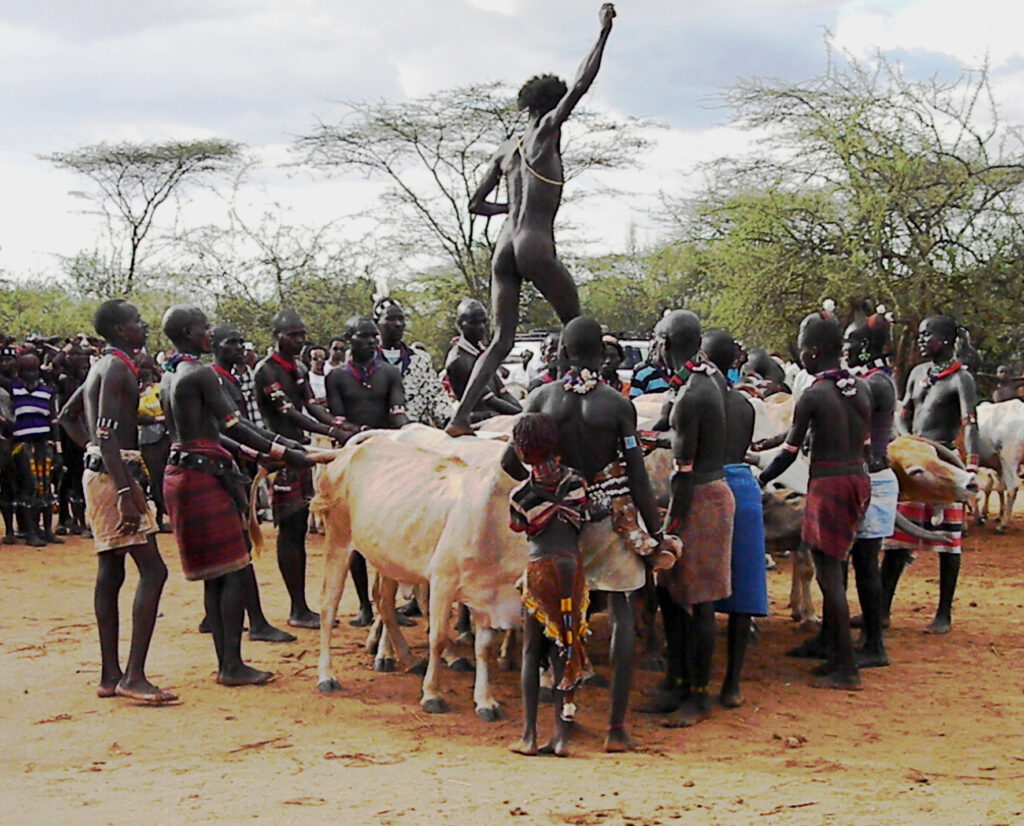
The Bull Jumping is not merely a game; it is a Rite of Passage.
- A young man must pass this test to transition from childhood to adulthood (becoming a Maz).
- Only a man who successfully completes this ceremony earns the right to marry, own cattle, and participate in the assembly of tribal elders.
- The Preparation Process
- The Decision: The father and tribal elders decide when the boy is ready for the challenge.
- The Invitation: Days before the jump, the “Ukuli” (the initiate) distributes pieces of bark called “Santi” to relatives as a form of invitation.
- Appearance: The young man shaves his head and rubs sand and fat onto his skin to prepare for the ritual.
- The Whipping of Women (Expression of Loyalty)
This part often shocks foreign visitors, but it holds deep significance for Hamer women:
- Female relatives (sisters and aunts) of the initiate go to the “Mazes” (those who have already passed the jump) and beg to be whipped.
- Why? The women undergo this to show their love and loyalty to their relative. The resulting scars give them the right to ask for his help in the future, saying, “I suffered this for you; now you must stand by me.”
- The scars on their backs are viewed as a mark of beauty and a source of pride.
- The Jumping Ritual
- Arranging the Cattle: Between 10 to 30 bulls and cows are lined up side-by-side, held steady by the Mazes. The backs of the cattle are rubbed with dung to make them slippery.
- The Jump: The Ukuli must run across the backs of the cattle four times while completely naked (representing purity and a new life).
- The Result: If he finishes without falling, he becomes a Maz. Falling is considered a great shame, though he may be given another chance later in life.
- after the Jump
- After winning, the young man joins other Mazes for several months, traveling between villages to celebrate and dance.
- His family then chooses a wife for him (the first wife is usually selected by the parents).
- The Role of Turmi
Turmi is the commercial and cultural hub of the Hamer people.
- Since the ceremony takes place in rural villages, Turmi serves as the primary base for tourists.
- At the Turmi market, the Hamer people appear in their finest traditional leather clothing and copper/beaded jewelry.
Note: This ceremony does not occur on a fixed date but depends on the family’s readiness. It is essential to confirm dates with local guides.
4-Day Sample Itinerary (Turmi Area)
Day 1: Addis Ababa — Jinka — Turmi
- Morning: Fly from Addis Ababa to Jinka.
- Afternoon: Drive from Jinka to Turmi (approx. 3 hours). Visit Banna ethnic villages along the way.
- Overnight: Turmi.
Day 2: Turmi Market and Ceremony Inquiries
- Morning: If it is Monday or Thursday, visit the vibrant Turmi market. Inquire with guides about which village is hosting a ceremony.
- Afternoon: Visit Hamer villages around Turmi and enjoy a traditional coffee ceremony.
- Overnight: Turmi.
Day 3: The Bull Jumping Day
- Late Morning: Travel to the ceremony site (usually in a rural area outside of town).
- Afternoon: Observe the women’s dancing, the whipping ritual, and the initiate’s preparation.
- Evening: The main Bull Jumping event.
- Overnight: Return to Turmi.
Day 4: Turmi — Jinka — Addis Ababa
- Morning: Return to Jinka. Visit Ari ethnic villages on the way.
- Afternoon: Fly from Jinka back to Addis Ababa.

Reviews
There are no reviews yet.