
Description
Here is a detailed look at the Dorze village:
- Location and Setting
- Location: Situated approximately 30 kilometers north of Arba Minch, high up in the mountains.
- Elevation: At nearly 2,400 meters above sea level, the climate is cool, misty, and refreshing.
- The View: The village offers a majestic panoramic view of Lakes Abaya and Chamo, along with the vast expanse of Nechisar National Park.
- Unique Architecture (The Beehive Huts)
The Dorze houses are among the most remarkable traditional structures in the world:
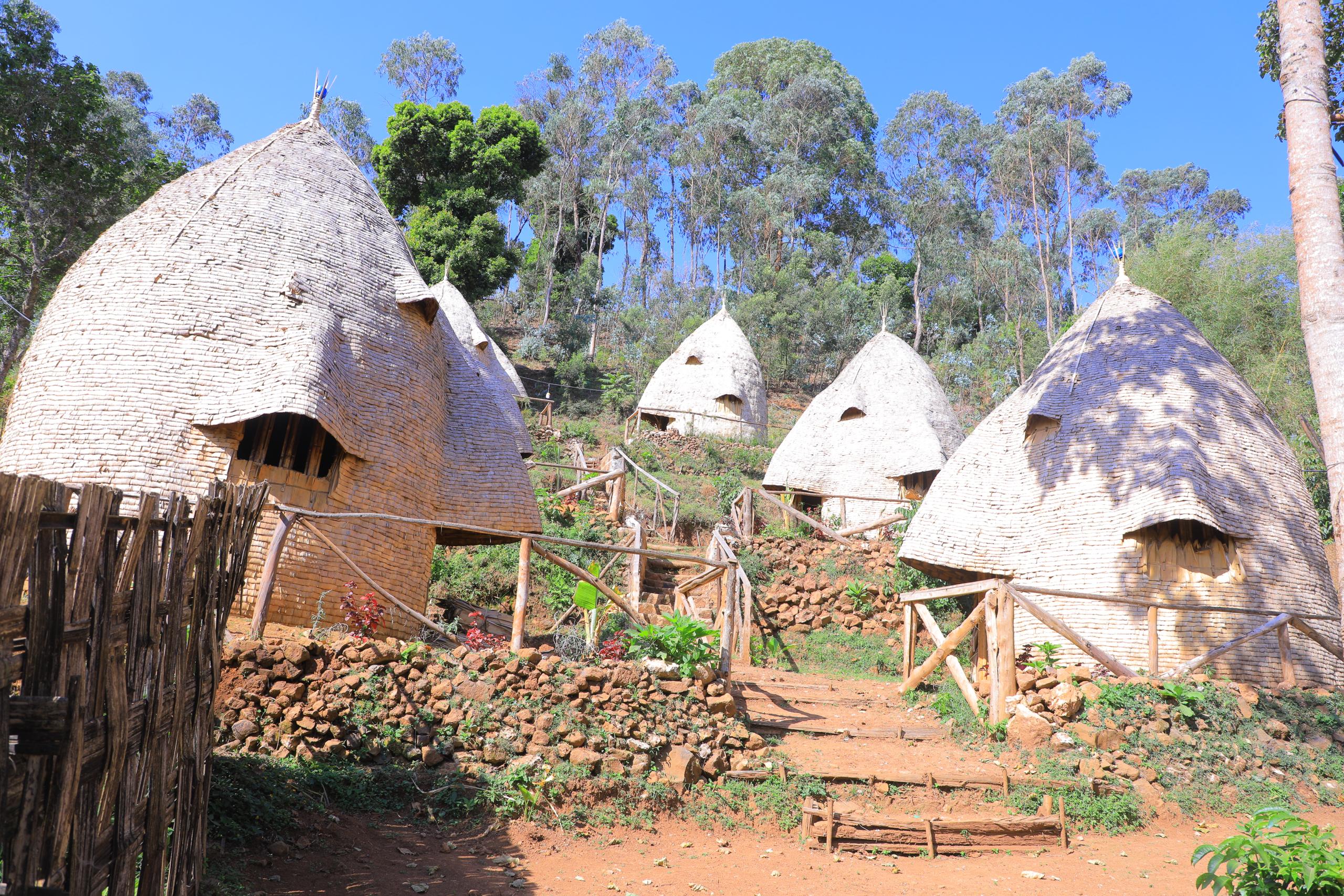
- Shape: They are shaped like an elephant’s head or a beehive and can reach heights of up to 12 meters.
- Materials: Built entirely from bamboo and Enset (false banana) leaves. They are constructed without a single nail or piece of metal and can last 80 years or more.
- “Shrinking Houses”: When the base of a house is damaged by termites or age, the Dorze simply trim the bottom and re-plant the entire structure into the ground. As a result, the house becomes shorter as it gets older.
- The Art of Weaving
The Dorze are celebrated as Ethiopia’s master weavers:
- Cotton: The men weave exquisite cotton garments such as the Buluko (heavy blankets), Gabi, and Netela.
- Economy: Weaving is a primary source of income. It is a common sight to see men working on traditional wooden looms in every neighborhood.
- The Enset Culture and Cuisine
The life of the Dorze people is inextricably linked to Enset (False Banana):
- Kocho: Prepared from the fermented trunk of the Enset plant, it is often served with organic honey and spiced butter.
- Areke: Their local spirit, made from Enset and grains, is famous for its strength and distinct flavor.
- Utility: Beyond food, Enset is used for roofing, making ropes, and as livestock feed.
- Traditional Dance and Social Life
- Dance: The Dorze have a high-energy, rhythmic dance called “Halala.” Their use of bamboo flutes and drums creates a unique and exhilarating musical atmosphere.
- Hospitality: Their respect for guests is exceptional. Visitors are often welcomed with open arms, local Areke, and Kocho.
Useful Information for Visitors
- Market Days: Visiting the markets in Chencha or the Dorze village (especially on Mondays and Thursdays) is the best way to witness local trade and daily life.
- Clothing: Due to the high altitude, warm clothing is essential.
- Accommodation: There are community-based lodges built in the traditional style, allowing guests to stay overnight and share in the authentic rural experience.
Travel Itinerary (Half-Day or Full-Day Trip from Arba Minch)
Morning (08:30 AM – 10:00 AM): Journey to Dorze
- Start your journey from Arba Minch, driving up the steep, scenic road leading to Chencha. The route offers breathtaking panoramic views of Arba Minch city, as well as Lakes Abaya and Chamo from above.
Late Morning (10:00 AM – 12:30 PM): Village Tour
- House Visit: Enter one of the traditional elephant-shaped huts to observe their unique architectural construction and the daily lifestyle within.
- Kocho Preparation: Watch and try your hand at the traditional process where local women scrape the False Banana (Enset) plant to prepare Kocho (traditional bread).
- Weaving Center: Visit the weaving workshops to see the intricate process of creating traditional Ethiopian garments like the Bulko and Tibeb.
Lunch Time (12:30 PM – 02:00 PM): Traditional Tasting
- Enjoy a cultural meal at Dorze Lodge or within a local home. Taste fresh, hot Kocho served with organic honey and Atmit (a traditional porridge/drink).
Afternoon (02:00 PM – 04:00 PM): Market Day (If Saturday or Tuesday)
- If your visit falls on these specific days, you can visit the vibrant traditional markets in Chencha or Dorze. This is an excellent opportunity to see colorful hand-woven clothes and various local products.

Reviews
There are no reviews yet.