
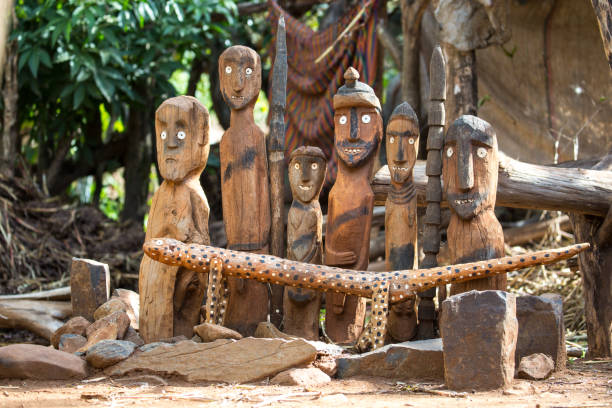
Detailed Explanation of Waga (Khetalita)
The Waga (also known locally as Khetalita) is a highly respected and ancient wooden funerary art form of the Konso people. It serves as a memorial for heroes and is one of the primary cultural assets of Konso inscribed on the UNESCO World Heritage List.
Detailed information regarding the Waga is provided below:
1. Meaning and Essence
- Commemoration: A Waga is a wooden statue carved and erected on the grave of a hero who performed great deeds for his country and people, a clan leader, or a prominent community elder.
- Historical Record: A Waga is more than just a statue; it is considered a living document that transmits the life story, heroic acts, and social status of the deceased to future generations.
2. Design and Symbolism of the Waga
When a Waga is carved, specific symbols are included to represent the identity of the deceased. For example:
- The Central Figure: Represents the hero himself. The face is often carved to show an expression of ferocity or bravery.
- Wives: Smaller figures carved to the left and right of the hero represent the number of wives the deceased had.
- Enemies and Predators: Figures carved at the hero’s feet or surrounding him represent enemies killed in battle or dangerous wild animals, such as lions and leopards, vanquished during hunts.
- Special Ornaments: Jewelry and symbols worn by the deceased during his lifetime (such as the “Kalasha” worn on the forehead) are carved into the statue.
3. Locations Where Waga are Erected
- On Graves: They are most commonly found standing in groups at burial sites.
- Village Entrances and Moras: They may also be placed near village entrances or public meeting spaces (Mora) to be seen by travelers and visitors, serving as a role model for the younger generation.
4. Cultural and Social Significance
- Teaching Patriotism: Seeing the Waga of heroes inspires the youth to be hardworking and willing to make sacrifices for their community.
- Craftsmanship: Wagas are carved from a very hard and durable wood known as “Dahara,” showcasing the superior woodworking skills of the Konso people.
- Spiritual Value: Although now viewed primarily as historical heritage, in ancient tradition, it was believed that the spirit of the deceased would protect the family and the village through the statue.
5. Current Status
Today, ancient Waga statues are preserved with honor in the Konso Cultural Museum. However, the tradition of carving new Wagas has declined due to various factors, such as religious shifts and cultural erosion. Nevertheless, the tourism sector continues to promote this art as a major cultural attraction.
Itinerary: Konso Zone
This itinerary is designed for travelers starting from Arba Minch or Karat (the capital of Konso).
Day 1: Arrival and Cultural Immersion
- Morning: Arrive in Karat and check into your accommodation.
- Afternoon: Visit the Konso Cultural Museum. Here, you can explore the history of the Konso people and view ancient Waga (wooden statues) collected from various villages.
- Evening: Relax and stay overnight at one of the comfortable lodges in Karat.
Day 2: The Wagas of Khetalita and Gesergiyo (New York)
- Morning: Travel to Khetalita to visit the ancient Waga statues. Gain deep insights into the meaning and craftsmanship of these figures from local guides.
- Afternoon: Visit Gesergiyo, a stunning landscape formed by natural soil erosion. Due to its striking resemblance to skyscrapers, it is famously nicknamed “New York.”
- Evening: Return to Karat and experience the local culture by tasting “Cheqa,” the traditional Konso beverage.
Day 3: Traditional Villages (Paletas) and Terraces
- Morning: Explore the UNESCO-registered Konso Traditional Villages and their famous stone Terracing. A visit to the ancient village of Mecheke is highly recommended to see the stone-walled architecture and “Mora” (community houses).
- Afternoon: Departure and return journey.
Important Information for Travelers
Note: The Waga statues are ancient and made of wood. Please visit them with great care to ensure these historical treasures are not damaged.