
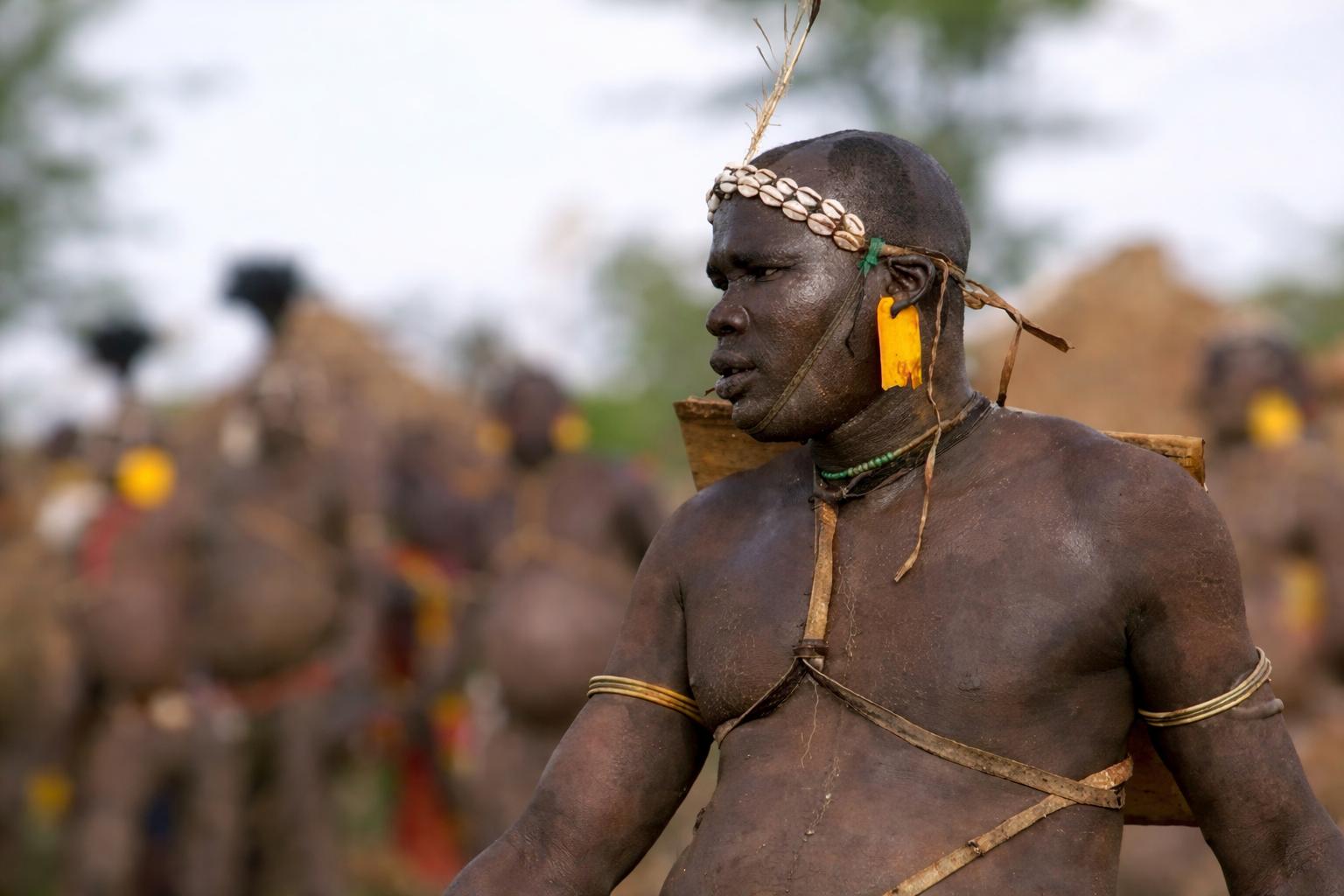
The Ka’el Festival of the Bodi People
The Bodi (also known as Me’en) people are one of the ethnic groups living in the Omo Valley of South Ethiopia. They are internationally famous for their unique and extraordinary “Ka’el” festival—a competition where Bodi men compete to have the largest abdomen or body mass.
- The Significance of “Ka’el”
The Ka’el festival is considered the Bodi New Year. The celebration primarily focuses on the girth of the men; a man with a large protruding belly is viewed as a hero, a symbol of beauty, and a sign of prosperity.
- Preparation (The Fattening Process)
Preparation begins 3 to 6 months before the festival:
- The Contestants: Each Bodi family nominates an unmarried man for the competition.
- Diet & Isolation: During this period, the contestants stay indoors, abstain from sexual relations, and cease all physical labor. Their sole task is to consume massive amounts of a mixture made from cow’s milk and blood.
- Blood Collection: The blood is drawn from a cow’s vein without killing the animal. This high-protein diet allows the men to gain weight rapidly and pushes their bellies outward.
- The Ceremony
On the day of the festival, several rituals take place:
- Body Decoration: Contestants cover their bodies with white ash and clay.
- The Parade: The men walk in circles, showcasing their large bellies to the community and the council of elders.
- Selection: Tribal elders choose the man with the largest abdomen as the winner.
- Sacrifice: A cow is slaughtered, and its blood and fat are examined by elders to predict the tribe’s future fortune.
- Honor for the Winner
- The winner is crowned the “Fat Man of the Year.”
- Although there is no cash prize, the winner gains immense fame and respect within the tribe. He becomes highly desirable and a preferred choice for marriage among the women.
- Lifestyle of the Bodi People
- Location: They live along the banks of the Omo River and near the Tama Conservation Area.
- Economy: They are primarily pastoralists (cattle herders) but also practice small-scale lowland farming (sorghum and maize).
- Significance of Cattle: For the Bodi, cattle are the foundation of wealth and status. Every cow is given an individual name.
- Challenges
- Resettlement: Large-scale irrigation and sugar development projects have reduced the community’s grazing lands.
- Modernization: As more youth move to urban areas for education, some traditional practices are gradually shifting.
Special Note: Once the festival ends and the men return to their regular diet and lifestyle, they usually lose the weight they gained within a few weeks.
Ka’el Festival Itinerary (Starting from Jinka)
CRITICAL WARNING: The Ka’el festival usually takes place in June or July, which is the rainy season in the Omo Valley. Roads can become extremely muddy and impassable. A heavy-duty 4WD vehicle and a highly experienced driver are mandatory.
Day 1: Jinka to Hana (Bodi Land)
- Morning: Early departure from Jinka. The route passes through Mago National Park toward the Omo River.
- The Journey: Although the distance is 120–140 km, it can take 5 to 7 hours due to road conditions.
- Afternoon: Arrive at Hana, the main Bodi settlement.
- Overnight: There are no standard hotels in Hana; camping is required. You must bring all camping gear and food from Jinka.
Day 2: Attending the Ka’el Festival
- Morning: Travel to the festival site (usually a village near Hana). Observe the contestants preparing and painting their bodies.
- Daytime: Watch the main ceremony, the dances, and the elders’ judging process. This is the best time for photography (be prepared to pay a photography fee).
- Evening: Return to camp for dinner.
Day 3: Village Visit and Return
- Morning: Visit local villages to see the post-festival atmosphere and observe the daily lives of Bodi women.
- Afternoon: Drive back to Jinka. If time permits, you can view wildlife while passing through Mago National Park.