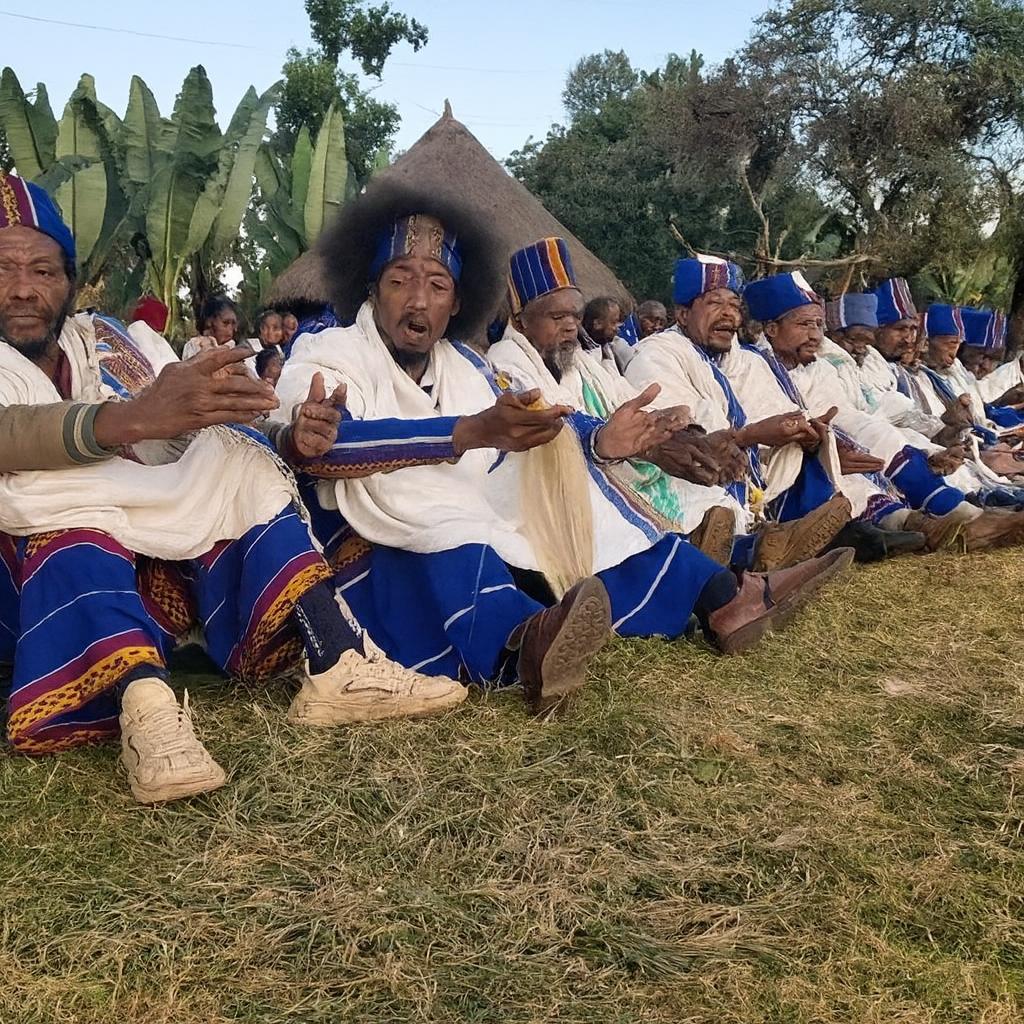
A Detailed Explanation of the Songo Elders’ Council
The Songo system is the crown jewel of social cohesion, justice administration and natural resource conservation in the Gedeo community.
- Identity and History
- The highest body of traditional governance: The Songo is the highest council of elders that upholds, enforces and interprets the traditional laws (Seera) and values of the Gedeo people.
- Function: It primarily resolves complex land and property ownership issues, family conflicts and social disputes peacefully through traditional means.
- Intergenerational Knowledge: Songo elders pass on their knowledge and wisdom from generation to generation. This system is believed to be over 500 years old.
- Connection to Heritage: The Songo explains why thousands of Songo Tutu have been preserved and why the Gedeo agricultural system is so sustainable. Because the system enforces the protection of land and heritage sites through a binding law.
- Organization and Legal System (Seera)
- Members: The council is elected by elders who are considered wise, knowledgeable and accepted by the community.
- Decision-making: Decisions are made based on consensus. This process takes a long time, but it ensures that the decision is accepted by the community.
- Conservation Organization: The Songo system enforces environmental protection (forests and coffee plantations) and heritage sites as part of the law. As a result, the landscape of Gedeo has maintained its lush greenness.
Cultural Experience Itinerary
This trip aims to observe the Songo Council of Elders in action and gain cultural integration (Note: Strict prior permission and a cultural guide are required to observe court sessions).
Day 1: Arrival and preparation in Dilla
- Morning: Travel from Addis Ababa to Dilla (by car or by flight to Hawassa and then by car).
- Afternoon: Arrival in Dilla and overnight.
- Evening: Hire a local guide: Hire a local guide with knowledge and contacts in the Gedeo traditional governance system.
- Briefing: Understand the purpose of the trip, local cultural rules and communication systems through the guide.
Day 2: Learn about and visit traditional governance
- Morning: Visit a village where the lower-level councils in the Gedeo traditional governance structure (e.g., councils operating at the level of farmers’ associations) meet.
- Objective: Understand how the Songo system is reflected in daily life in practice.
- Afternoon: Formal Elder Meeting: Time to have a guided conversation with a Songo council member or a representative of the Afengel. Understanding the Seera (customary law), conflict resolution processes and the role of heritage conservation. (This meeting requires high cultural respect).
- Evening: Overnight in Dilla or a nearby town.
Day 3: Connecting Culture and Heritage Conservation and Return
- Morning: Visit the Songo Tutu site. Reconnect with the physical heritage that the elders have just visited and are protecting. Visit the Enseta and Coffee Agroforestry System (which is protected by strict traditional management rules).
- Afternoon: Return to the starting point.
Important Notes for Cultural Visits
- Etiquette: Songo elders are highly respected. It is important to show appropriate cultural respect (e.g., in dress, tone of voice, and mannerisms) when interacting with them.
- Permission and Guide: The Songo Council is a highly confidential institution. It is not permitted to approach meeting places or senior elders without the permission of a local cultural expert or guide.
- Time of Travel: Even if your visit coincides with a meeting of the Council of Elders, please understand that direct observation of the meeting is only permitted with the strict permission of the guide and the local administration.
Since the focus of your trip is cultural integration, it is essential to find a local cultural guide and gain in-depth knowledge of the Songo system.
Do you need additional details (e.g., hotel recommendations or reliable tour guides) to help you plan your trip?

