
Polot (Polota): Traditional Underground Granaries of Dirashe
The Polot is a marvelous feat of indigenous knowledge and cultural engineering found in the Dirashe woreda of the Gardula Zone. The four ethnic groups residing in Gardula utilize this ancient technology to store grain underground for extended periods.
Construction and Engineering
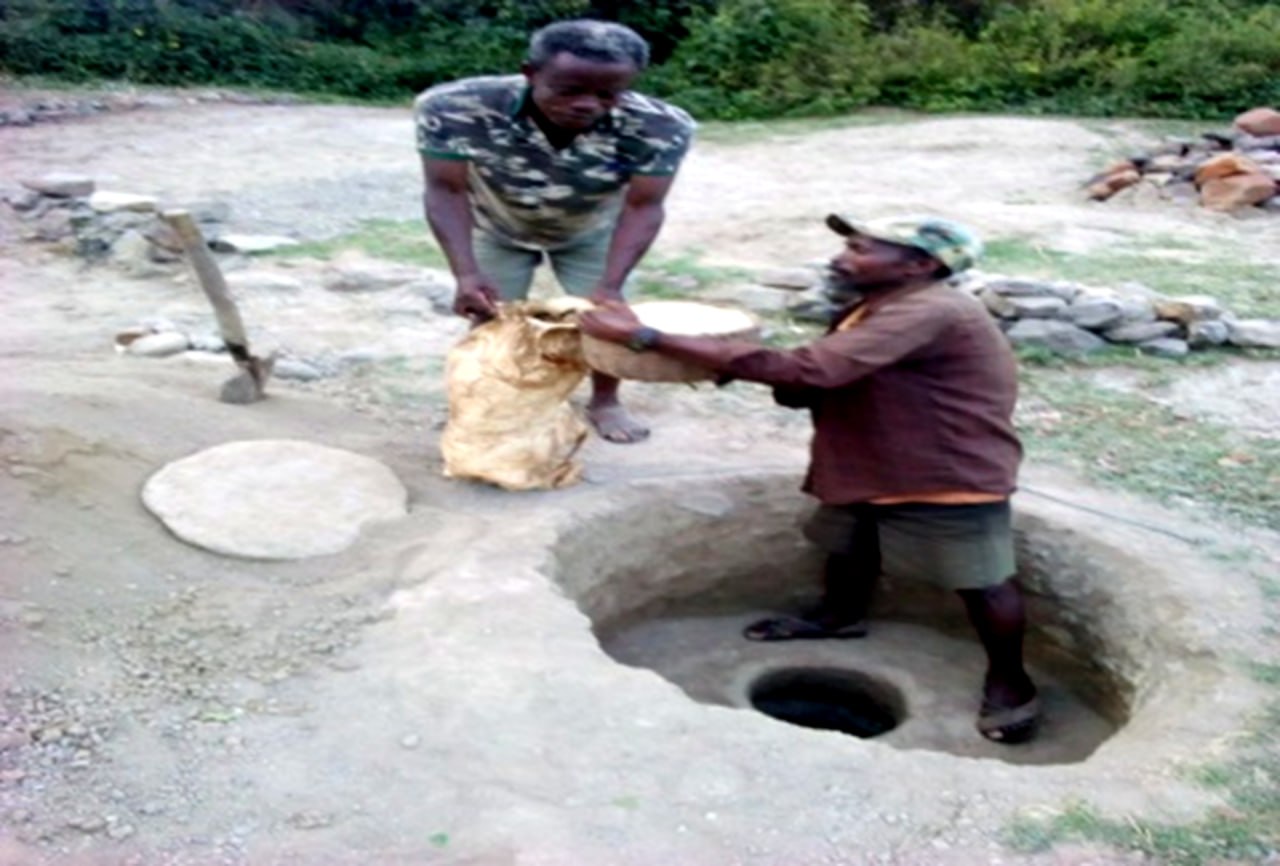
Polot sites are carefully selected in non-porous or rocky areas where groundwater cannot penetrate during the rainy season. Construction involves a two-stage excavation process:
- The Upper Level (Entrance): This section is 2 to 3 meters wide and 70 cm to 1 meter deep. The soil here remains soft, serving as a platform when loading or unloading grain.
- The Inner Storage Chamber: Extending from the upper level, this chamber widens inward (bottle-shaped). It averages 2 to 3 meters in width and 3 to 4 meters in depth.
- The Seal (Palet): To prevent soil and moisture from entering, a circular stone known as a “Palet” is tightly fitted to the opening.
Capacity and Significance
- Storage Capacity: On average, a single Polot can hold 40 to 60 quintals of grain (primarily maize and sorghum).
- Historical Utility: This art form existed well before the Italian occupation. It played a major role in hiding crop yields from invaders and looters, keeping grain in high quality for many years, and protecting it from pests.
1-Day Itinerary (Starting from Gidole Town)
This itinerary is planned for a one-day visit to explore the art of Polot and the surrounding area:
Morning: Exploring the Art of Polot
- 08:00 – 11:00: Accompanied by a local guide, head to the Dirashe rural villages. Visit the Polot granaries located near residential areas to observe their construction and preservation processes.
Afternoon: Agricultural Systems and Natural Views
- 11:00 – 13:00: Brief lunch break in Gidole town.
- 13:00 – 15:00: Explore the Tarka and Potaya agricultural systems (water reservoirs).
- 15:00 – 16:30: Visit the Karmo viewpoint to admire the beauty of Lakes Chamo and Abaya, as well as the “Bridge of God.”
Evening: Cultural Experience
- 16:30 – 18:00: Conclude your trip by tasting traditional “Parshot” with local residents and joining the community.
Important Tips
- Local Guide: To maintain cultural respect at Polot sites, you must have a local guide with you.
- Cultural Etiquette: Listening to the advice of elders and visiting farming areas with respect will make your experience more enriching.