
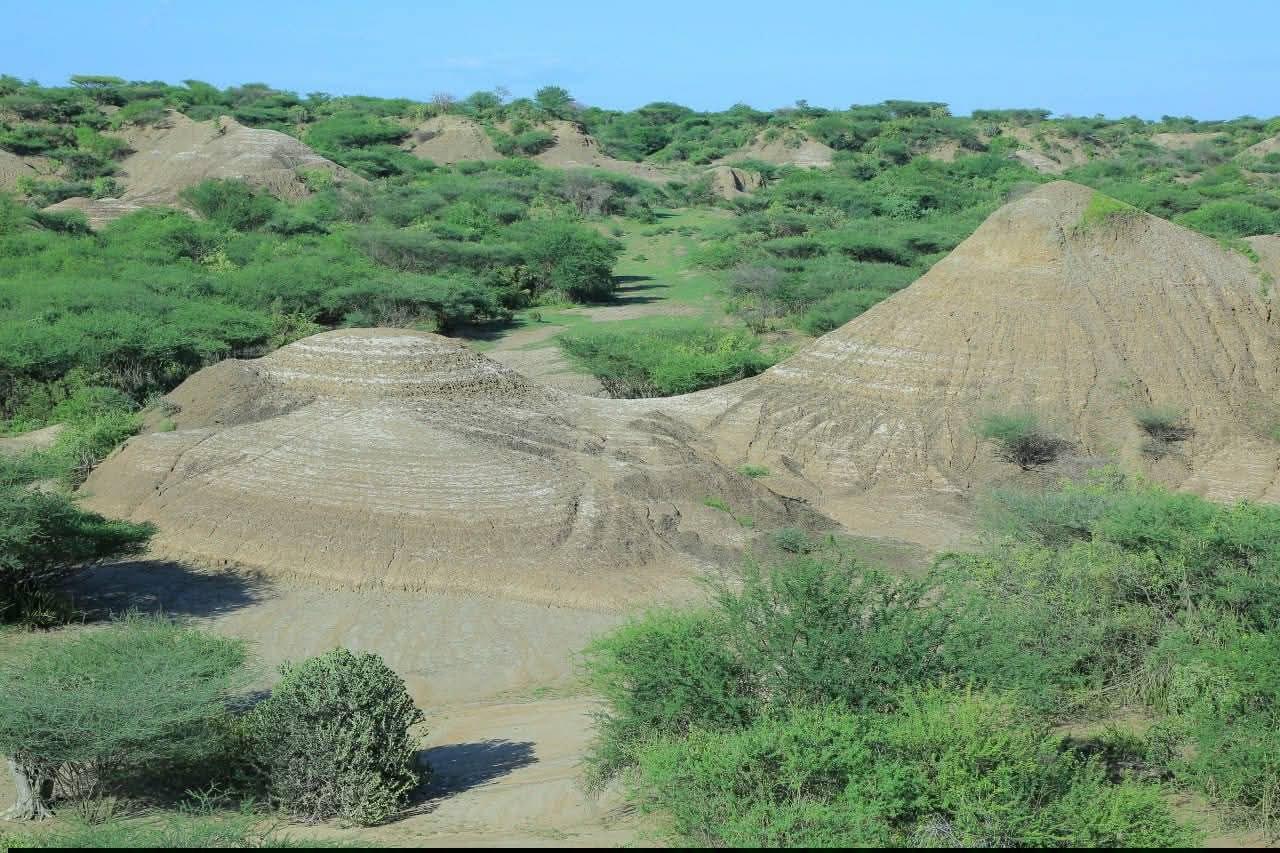
Lower Valley of the Omo: A UNESCO World Heritage Site
The Lower Valley of the Omo is one of the most significant historical and scientific sites in the world. Recognizing its global importance, UNESCO designated it a World Heritage Site in 1980. Often referred to as the “Cradle of Humankind,” this site holds the secrets of human origins.
General Overview
- Location: Located in southwestern Ethiopia, it encompasses the lower part of the Omo River basin, near Lake Turkana.
- Landscape: Although the area today is semi-arid and harsh, its geological formations have kept millions of years of history buried preserved within the earth’s layers.
Paleontological Significance
UNESCO recognized this site primarily for its exceptional contribution to understanding human evolution:
- Hominid Fossils: Significant hominid (human ancestor) fossils dating back more than 2.4 million years have been discovered here.
- Omo I and Omo II: These famous skull remains, discovered in the 1960s and 70s, proved that the age of modern humans (Homo sapiens) is much older than previously believed.
Archaeological Discoveries
The valley has provided evidence of humankind’s oldest technology:
- Stone Tools: Ancient known tools used by early humans for defense and food processing have been found here.
- Human Adaptation: These findings offer deep insights into how our ancestors began to adapt to their environment and how the human brain evolved.
Unique Geology
What make the Omo Valley unique are its sedimentary layers. Each layer represents a specific era, allowing scientists to accurately date the fossils found within them.
- Volcanic Ash: Interspersed layers of volcanic ash between sediments allow for highly precise radiometric dating.
A “Living Museum”
While UNESCO focuses on fossils and history, the valley is also celebrated as a “living museum” because it is home to diverse ethnic groups that preserve ancient traditions.
- Cultural Diversity: Groups such as the Mursi, Hamer, Dasanech, Karo, and Nyangatom live here, maintaining the lifestyles of their ancestors.
- Dual Value: The co-existence of modern indigenous cultures alongside ancient prehistoric layers gives the site a unique dual significance.
Important Information for Visitors
- Legal Protection: It is strictly forbidden by law to touch, pick up, or remove stones, fossils, or bones found in areas protected by UNESCO.
- National Museum: Before or after your trip, you should visit the National Museum in Addis Ababa. The original “Omo One” and “Omo Two” skulls are kept there for preservation.
- Preparation: The area is very hot and remote. Ensure you carry adequate water, food, and medical supplies.
Itinerary
- Day 1: Addis Ababa – Jinka
- Morning: Fly to Jinka.
- Activity: Visit the South Omo Research Center. This museum displays images of fossils discovered in the valley and explains the history of the local tribes.
- Evening: Overnight in Jinka town.
- Day 2: Jinka – Shungura – Kangaten
- Morning: Drive to Nyangatom (Kangaten).
- Activity: Visit Shungura, one of the most critical paleontological sites where numerous fossils and stone tools were discovered. (Note: While the originals are in the National Museum, you can explore the geological excavations).
- Evening: Overnight in Turmi or Kangaten (camping).
- Day 3: Kangaten – Omorete (Delta)
- Morning: Drive to the land of the Dasanech.
- Sightseeing: The Omo River Delta. The sediment layers in this region are rich in early human history.
- Evening: Overnight stay in Turmi town.