
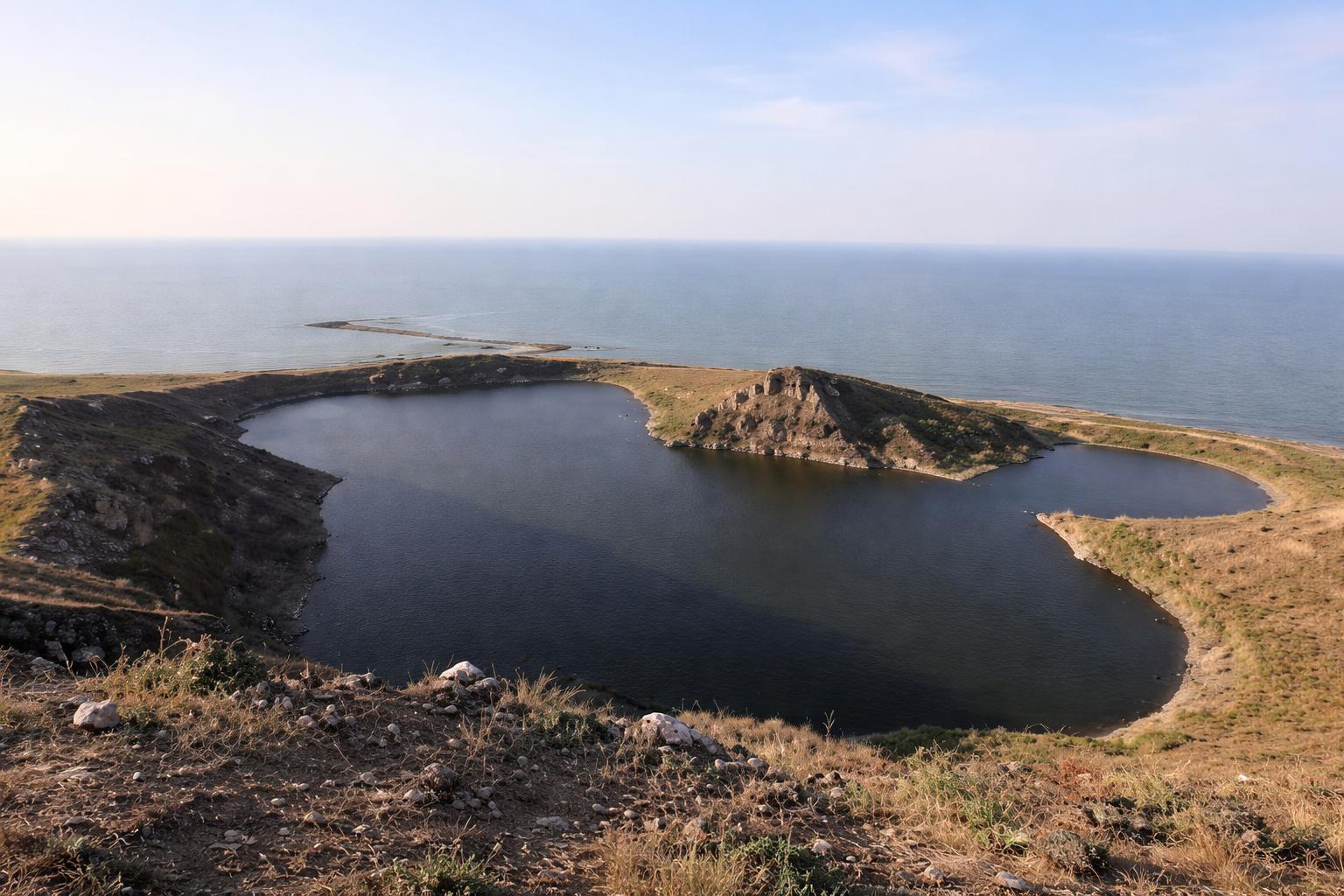
Lake Turkana
Lake Turkana is a breathtaking, expansive body of water located in the Great Rift Valley. It holds the title of the world’s largest permanent desert lake and is shared between Ethiopia and Kenya.
Key Characteristics
- Location: In the South Omo Zone, accessed via Omorate town in the Dassanech District, right near the Ethio-Kenyan border.
- Dimensions: It is 290 km long and up to 32 km wide, covering a total surface area of 6,405 square kilometers.
- Water Source: The Omo River is the lifeblood of the lake, contributing over 90% of its total water influx.
- Endorheic Basin: The Lake has no outlet; water loss occurs solely through evaporation, resulting in a moderate concentration of salt and soda (an alkaline lake).
Global and Biological Value
- “Cradle of Humankind”: The Lake Turkana basin (especially sites like Koobi Fora) is globally famous for the discovery of hominid fossils dating back millions of years, making it a key site for understanding human evolution.
- UNESCO World Heritage Site: Recognized globally for its natural, evolutionary, and paleontological significance.
- Wildlife: It hosts the world’s largest population of Nile crocodiles, over 60 fish species, and massive flocks of migratory birds, including flamingos.
Itinerary (4 Days / 3 Nights)
- Day 1: Jinka to Turmi – Drive from Jinka to Turmi. Visit Hamar villages. If fortunate, witness the famous “Bull Jumping” rite of passage. Overnight in Turmi.
- Day 2: Turmi to Omorate & Lake Turkana – Drive to Omorate. Cross the Omo River using a traditional dugout canoe. Visit the Dassanech villages and travel toward the northern delta of the lake. Return to Omorate town for overnight stay.
- Day 3: Bird Watching & Karo Village – Enjoy morning birdwatching by the riverbanks. Afternoon drive to the Karo village of Kolcho, situated on a high cliff offering a stunning panoramic view of the winding Omo River loop. Overnight in Turmi.
- Day 4: Return – Drive back to Jinka and fly to Addis Ababa.