
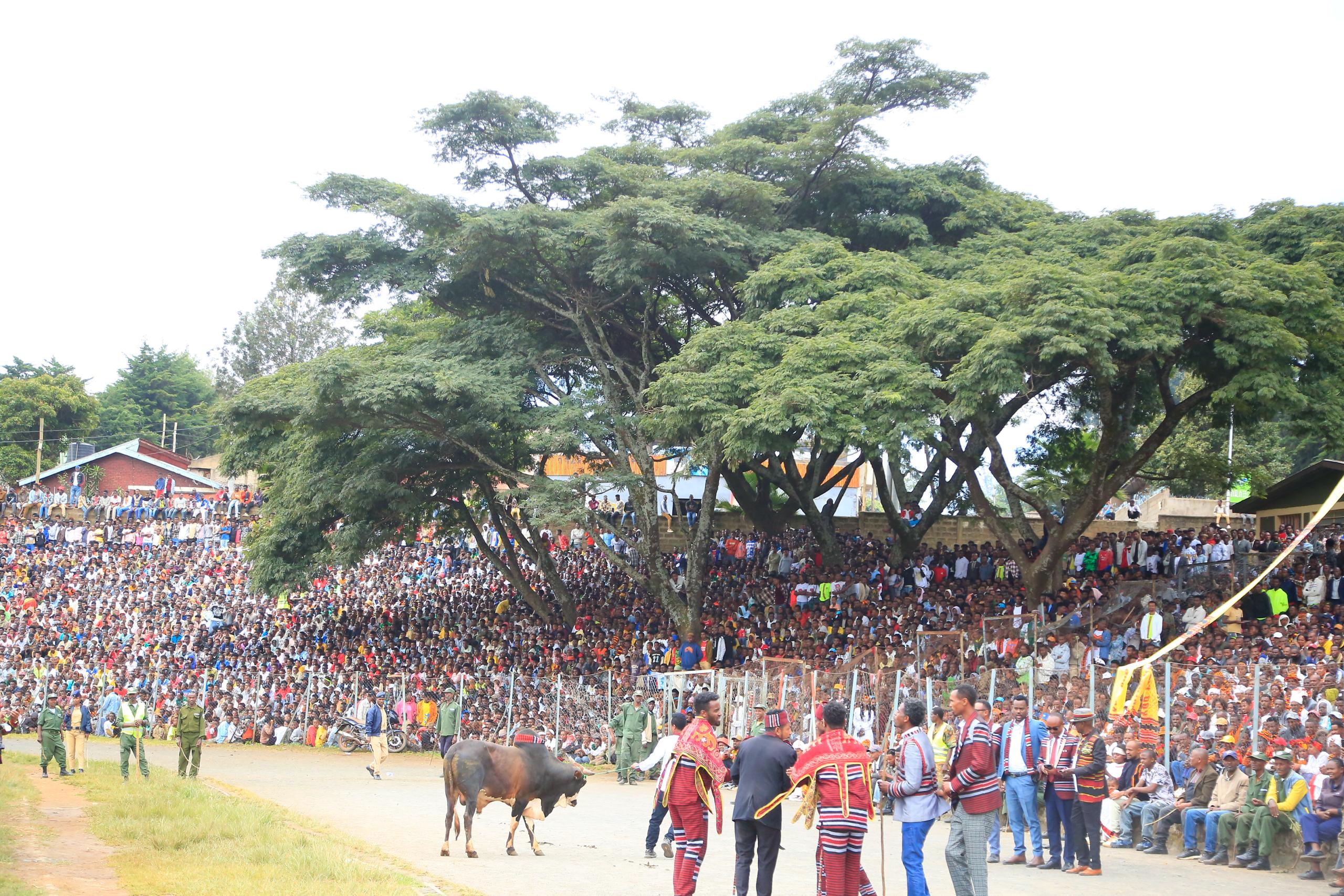
Gifata
Gifata means “crossing over” (from the old to the newyear) in the Wolaita language, and is a great festival of the Wolaita people that celebrates the change of seasons and is an expression of love, reconciliation, unity and gratitude.
Here is a detailed explanation of the Gifata festival:-
When is Gifata Celebrated?
- Festival time: It is celebrated every year from September to early October.
- The actual day of the festival is celebrated between 8-14 days before the actual day of the festival
Gifata preparation and stages
There are main activities that take place before and during the festival, including:
- Salt: The cattle are given traditional salt; this helps them eat well and stay healthy.
- (Gifata Lagiya): While women prepare butter and traditional dishes, men prepare the animals and materials for slaughter.
- Reconciliation period: People who were separated in the old year do not move on to the new year without making peace and getting closer.
Food and Drink Culture
There are special dishes prepared during the Gifata festival:
- Muchua: A special Gifata dish made with corn or bula, butter and various spices.
- Bachira: A sweet dish made with butter and corn.
- Boride: A traditional Wolaita drink made from various grains.
Cultural Dances and Games
- Kassa: A dance performed by young and old people to express joy.
- Dances: Young people go from house to house in groups and perform traditional songs. Poems praising the country’s history, heroism and work culture are recited during this time.
Benefits of Social Networking
- Family Reunion: Wolaita people living in distant countries return to their hometowns for the Gifata festival and spend it with their families.
- Bula: After the festival, neighbors and relatives gather together to eat and welcome the New Year together.
- Peace: Forgetting the mistakes of the past year and renewing them with forgiveness.
- Unity: Eating together with family and neighbors.
- Generosity: Helping those who do not have money and spending the holiday happily.
- Gratitude: Thanking the Creator for a good harvest and health.
Overall, Gifata is a great event where the Wolaita people show their identity, history, and traditions to the world.
Tips for Visitors
- Date of Celebration: The exact date of the festival is determined by traditional leaders each year, so it is important to check the date announced by the Wolaita Zone Tourism Office before you go.
- Traditional Clothing: To enjoy the festival more, it will be special if you wear the traditional Wolaita dress (buluko).
- Language Use: Using the word “Yoya” (welcome/welcome) will help you communicate with the local community easily.
Travel Plan (for the Festival)
Since this festival is celebrated with great enthusiasm at the Sodo Stadium and in every home, it is best to plan your trip in mid-September.
Day 1: Travel to Wolaita Sodo
- Morning transportation: Drive from Addis Ababa to Sodo.
- Accommodation: You will find hotels (e.g. Levi, Tourist or Maraki Lodges) in Sodo town.
- Evening: Enjoy the festive atmosphere of the city.
Day 2: Wazema and the main festival celebration
- Morning: Attend a grand cultural show at Sodo Stadium (where thousands of people dance in traditional costumes).
- Afternoon: Visit rural districts (such as Boloso Sore or Damot Gale) to see the slaughter and eating ceremony that takes place in each house.
- Evening: Watch traditional “Bache” dances.
Day 3: Visit nature and return
- To complete your trip with additional time, visit Kalo Egzer Bridge or Damot Mountain.