
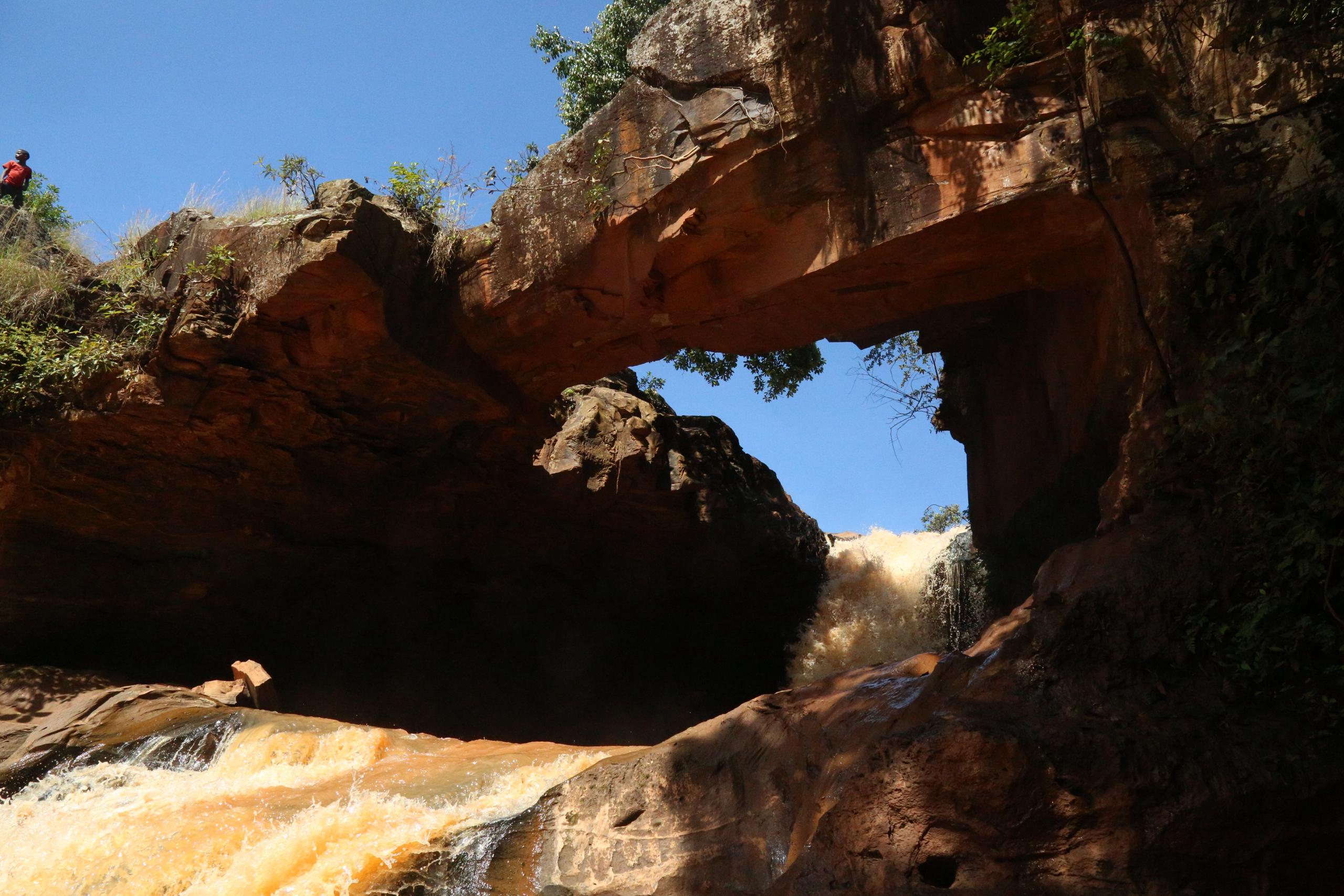
God’s Bridge /Egzer Bridge is a magnificent natural bridge located on the border of Wolayta Zone and Gofa Zone. Since this place is untouched by human hands and was created only by natural phenomena, it is called “Egzer Bridge” or “Tosa Zarpiya” in the local languages.
Here is a detailed explanation of Egzer Bridge:
Location
- Location: The bridge is located on the Manisa River, a tributary of the Omo River, which borders Offa Woreda and Gofa Zone in Wolayta Zone.
- This magnificent place can be reached by traveling from Sodo town in Wolayta and passing through Gesuba town.
Natural formation
- How was it built? The river eroded a huge single rock (monolithic rock) over the centuries, creating a road from the inside, leaving the upper part intact as a bridge.
- Size: The bridge is wide and strong, so people, travelers, and animals can use it to cross the river without fear. The river also flows with a loud sound.
Historical and Cultural Perspective
- Name: The so-called “God’s Bridge” is called “God’s Bridge” because it was not built by human hands, but by the wisdom of nature (the Creator).
- Legend: The Bridge has existed in the local community since ancient times and is mentioned in various stories.
Tourist Attraction
What makes this place attractive to nature lovers and researchers?
- Spectacular view: The sound of the river flowing under the bridge and the splashing of the water gives a special feeling.
- Pure nature: The area is covered with forests and full of birdsong, making it ideal for hiking and relaxation.
- Since the destination is close to Maze National Park, visitors can easily visit the park and the bridge in one trip.
Strategic importance
- This bridge served as a major crossroads for trade and social interaction between the Wolayta and Gofa peoples before modern roads were built.
Useful tips for visiting
- Hiking: – The rocks are slippery, so wear sturdy and non-slip hiking shoes.
- Season: – The post-monsoon season (September to January) is the best time to visit, as the area is green and the river is full.
- Clothing: Bring light clothing and a waterproof jacket.
- Asking for information from a local guide or the Wolayta Zone Tourism Office will make the route easier.
Itinerary (from Addis Ababa)
Wolaita Sodo is a very convenient city to travel to and has many transportation options.
Day 1: Travel to Wolaita Sodo
- Car trip: You can travel by Addis Ababa – Hosanna – Sodo or Addis Ababa – Shashemene – Sodo road (takes 6-8 hours).
- Accommodation: Stay in standard hotels in Sodo town (e.g. Levi Hotel, Haile Resort) or overnight.
Day 2: Visit the “Exercise Bridge”
- Morning: Depart from Sodo and drive to Gesuba town (takes 1 hour and 30 minutes by car).
- Hiking: After leaving the road, you will need to walk for a few minutes through green countryside to reach the bridge.
- Activities: Walk on the bridge, see the river and visit the small waterfall nearby.
- Afternoon: Return to Sodo town, enjoying the beautiful natural vegetation and winding roads, and enjoy tasting the local traditional food (Kocho and Mucho).
Day 3: Continue your journey or return
- Depart Sodo in the morning and return to Addis Ababa.