
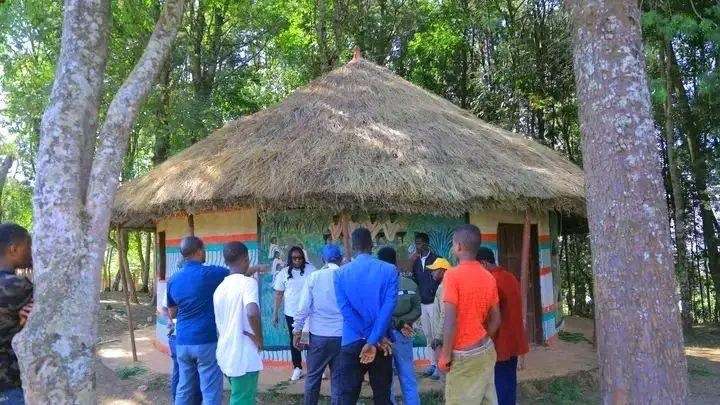
Basketo Zone Temporary Museum
The Basketo Zone Temporary Museum is a cultural center located in Laska town. It is a vital institution established to preserve and pass on the history, art, and traditional lifestyles of the Basketo people to future generations.
- Objectives of the Museum
- Heritage Preservation: Collecting and securing at-risk ancient Basketo artifacts in a centralized location.
- Promotion: Providing visitors with comprehensive insights into the origins and culture of the Basketo people.
- Facilitating Research: Serving as a historical resource for students and researchers.
- Main Artifacts in the Museum
- Household Items: Ancient water containers and grain storage tools made from clay, wood, and leather.
- Traditional Weapons: Spears, shields, and bows used in ancient times for hunting and self-defense.
- Ornaments and Attire: A collection of traditional clothing and jewelry used in various ceremonies (such as “Shola Kasha”).
- Handicrafts: Examples of weaving, leatherwork, and wood carving.
- Agricultural Tools: Traditional implements used by farmers to till the land and harvest crops throughout history.
- Historical Documents
The museum houses texts and photographs that narrate the origins of the ethnic group, their administrative structure, and the history of ancient leaders. This helps the younger generation understand the history of their forefathers.
Half-Day Visit Itinerary
This itinerary is designed for visitors with limited time who wish to explore the history of the Basketo people.
- Morning (08:30 – 10:30): Museum tour. Accompanied by a professional guide, visit the artifacts and gain deep insights into the historical journey of the Basketo.
- Late Morning (10:30 – 12:00): Visit the Laska traditional market. Observe how the handicrafts seen in the museum are produced.
- Lunch (12:00 – 13:00): Purchase traditional Basketo clothing or handicraft products as souvenirs.
Tips for Visitors
- Photography: Before taking photographs of certain artifacts, please ask for permission from the museum staff.
- Documentation: Since the museum offers deep historical explanations, it is recommended to bring a notebook or a voice recorder.
- Support: As the museum is currently in a “temporary” stage, your visit and entrance fee make a significant contribution to the efforts to build a permanent institution.