
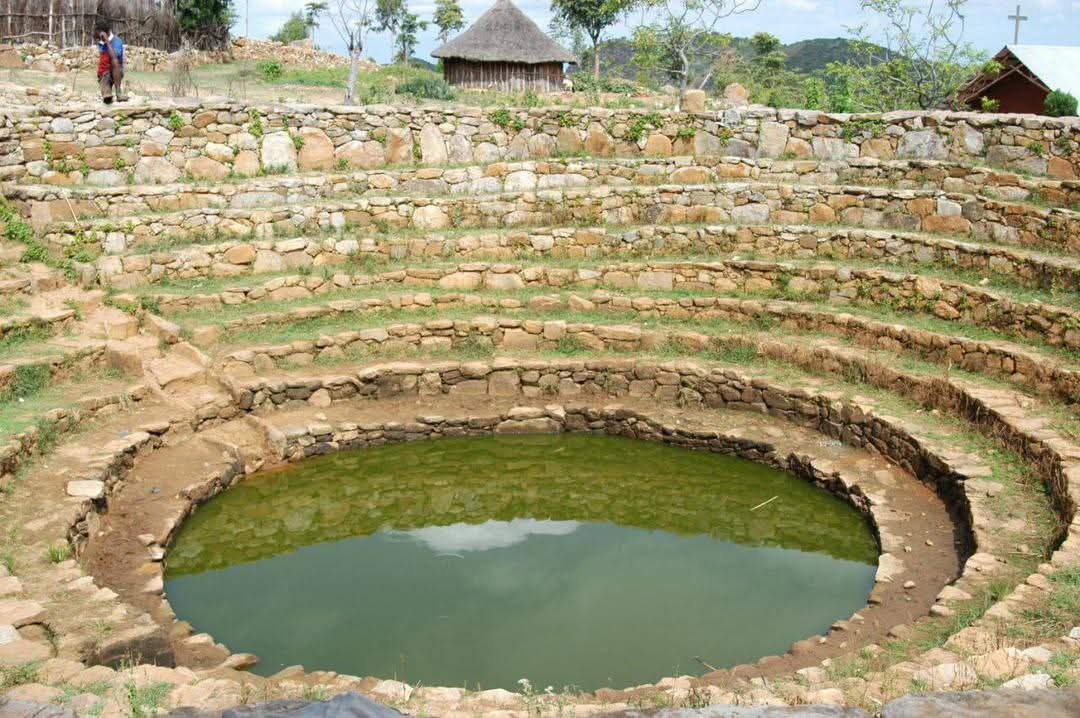
Detailed Explanation of Harta (Water Ponds)
In Konso, a Harta (community water pond) is a feat of social engineering designed to help the community survive in a dry, drought-prone environment.
Main Functions of the Harta:
- Rainwater Harvesting: Since rainfall in Konso is low and erratic, the community has dug ponds and created channels to collect rainwater since ancient times. These ponds store water for livestock and household use.
- Soil Conservation: Hartas are integrated with traditional hillside terracing. The collected water helps maintain soil moisture and prevents erosion.
- Social Cohesion: Excavating, cleaning, and maintaining a Harta requires collective community effort. Every member of the kebele contributes, reinforcing unity and shared responsibility.
1. Structure and Construction
- The Basin: A Harta is a large hand-dug reservoir located in low-lying areas to capture runoff during the rainy season.
- Lining: To prevent water from seeping into the ground, the floor and walls of the pond are lined with clay soil and stones.
2. Social and Ecological Importance
- Livestock Watering: It serves as the primary drinking water source for cattle, sheep, and goats.
- Domestic Use: During severe water shortages, residents use the water for washing clothes and other hygiene needs.
- Environmental Benefit: The ponds help recharge groundwater and maintain vegetation moisture in the surrounding area.
3. Community Management and Rules
- Collective Maintenance: Village residents and clean the ponds annually.
- Strict Rules: Bathing, dumping waste, or polluting the water in any way is strictly prohibited.
- Fair Access: Livestock owners must take turns watering their animals in an orderly fashion.
4. Tourism Value
- Traditional Ingenuity: Alongside the stone terraces, the Harta highlights the Konso people’s climate adaptation and resource management strategies.
- Scenic Scenes: Seeing the community gather around the ponds to water their herds, especially during dry seasons, offers a highly photogenic glimpse into local pastoral life.
Travel Itinerary (Harta Route)
This route highlights the sophisticated traditional water management systems of the Konso people.
- Day 1: Karat Town and Nearby Harta
- Morning: Observe daily life around the Hartas near Karat Town as locals collect water and water their livestock.
- Afternoon: Learn from community members how these ponds are maintained, and managed to ensure a sustainable water supply.
- Evening: Spend the night at a lodge in Karat.