
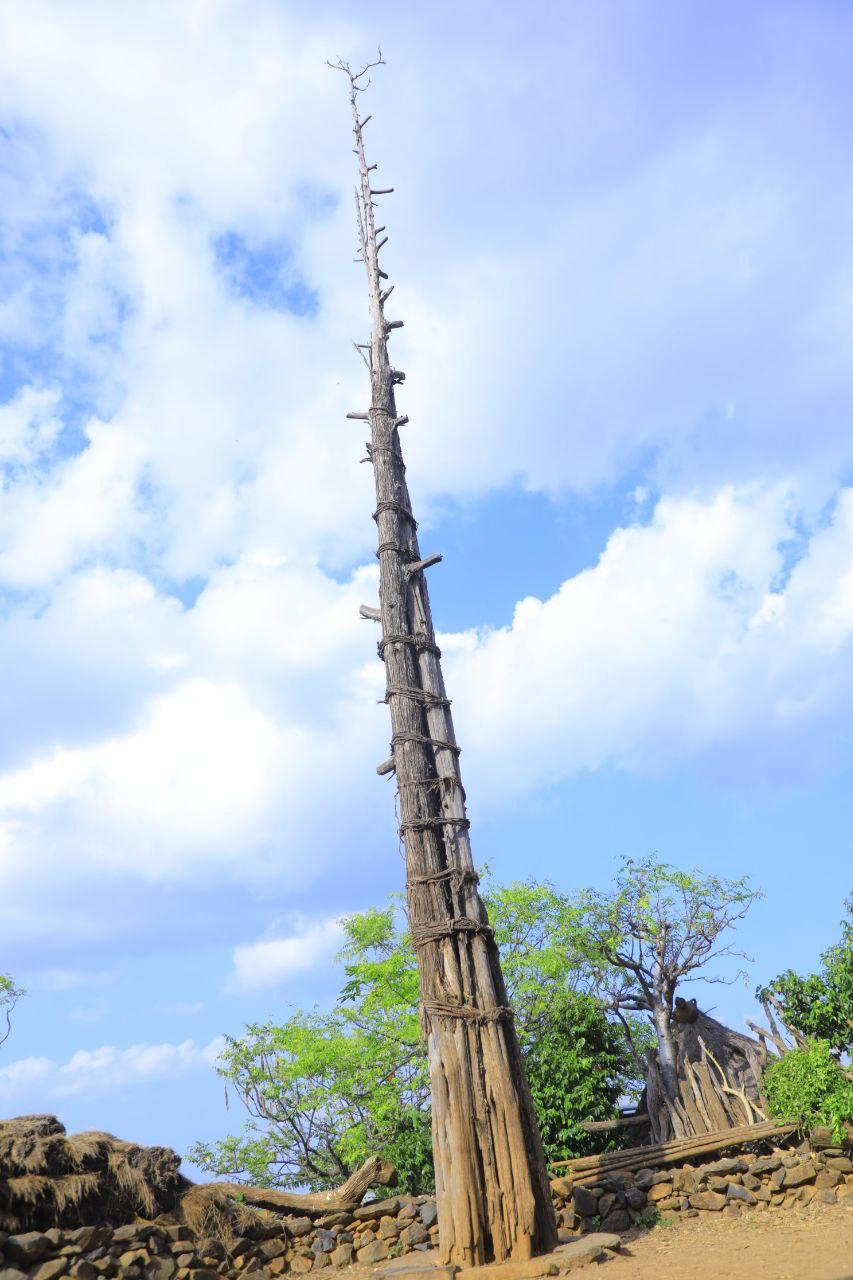
Detailed Explanation of Olahita (Generation Pole)
1. Identity and Meaning
- Generational Marker: The Olahita is a tall wooden pole erected in a Konso village (Kanta) once every 18 years.
- Power Transition: It marks the peaceful transfer of leadership and responsibility from one generation to the next, signaling that the incoming generation has officially assumed responsibility for the village’s peace, security, and development.
2. Historical Chronology
The Olahita serves as a physical calendar for dating a village:
- The Math: By counting the number of Olahita poles standing in front of the Mora, you can calculate how long ago the village was founded.
- Generational Sequence: Each pole represents the reign of a distinct generation.
3. Economic and Tourism Benefits
- Historical Witness: Visitors can immediately appreciate the antiquity and organized nature of the Konso community just by observing the Olahita.
- Photography: Its unique appearance and deep historical meaning make it a prime spot for photographers and historians.
- Local Employment: It creates jobs for local youth working as tour guides.
- Community Development: Entrance fees paid by tourists go toward local community development funds.
- Local Crafts: Tourists can purchase miniature hand-carved Olahita poles and traditional multi-layered Konso skirts, providing direct income to local artisans.
Travel Itinerary (Olahita Route)
This itinerary focuses on ancient villages where the highest number of Olahita poles have been preserved.
- Day 1: Ancient Mecheqe Village
- Morning: Travel to Mecheqe Village. As one of the UNESCO-registered ancient villages, Mecheke preserves some of the oldest Olahita poles.
- Afternoon: Visit the ancient Mora and the Harta (water pond) within Mecqeke.
- Evening: Spend the night at a lodge in Karat.