
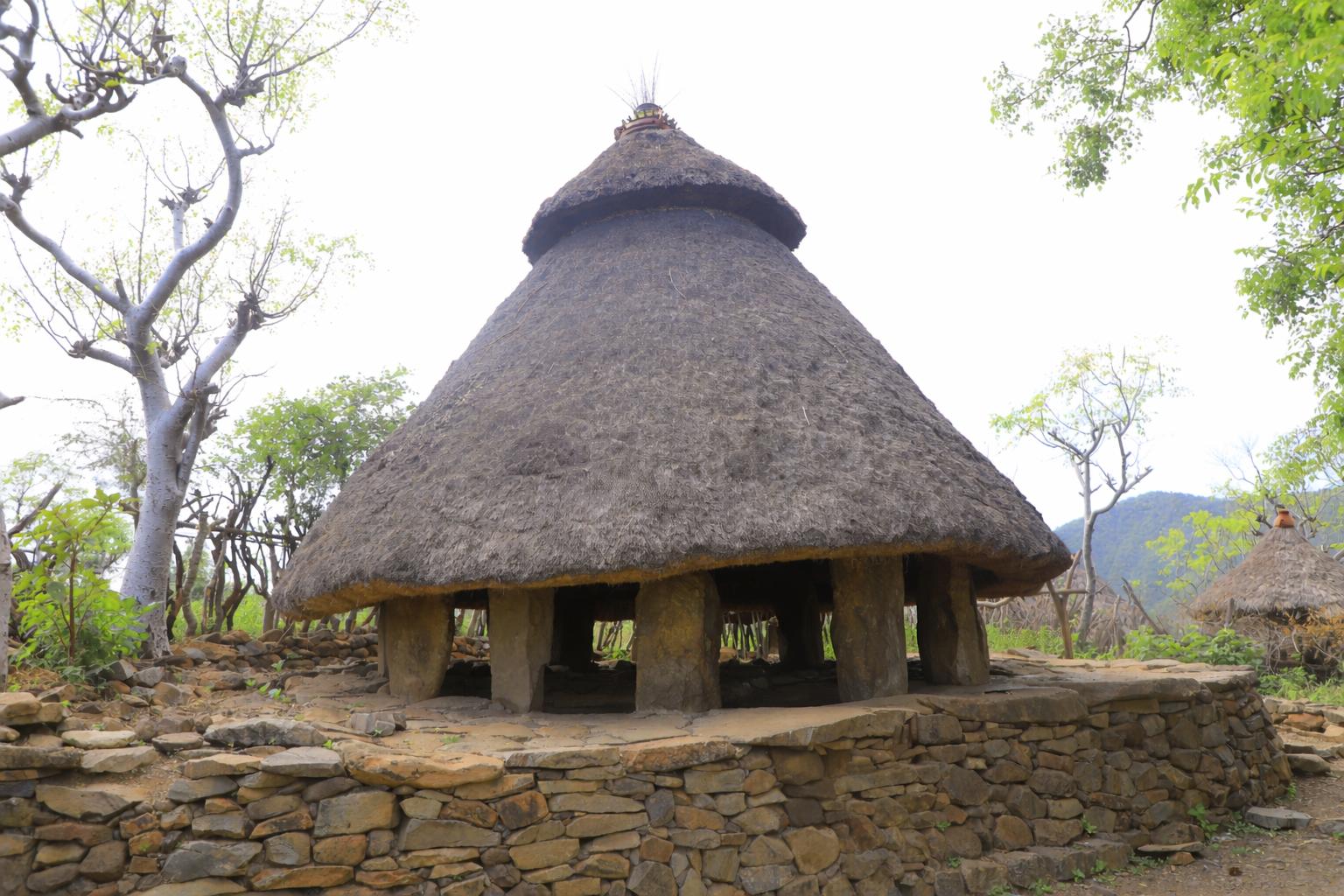
Detailed Explanation of Mora
In the traditional villages of the Konso Zone, the Mora is an essential public space that serves social, political, and spiritual functions. A Konso village is considered incomplete without a Mora.
It is a forum for community discussions, a traditional courtroom for elder-led dispute resolutions, and a dormitory where the village youth sleep at night to provide security. The Konso community views the Mora as a symbol of democracy, justice, and social cohesion that has held the society together for centuries.
- Location: Depending on the size of the village, there may be more than one Mora. The primary Mora is usually situated in the center of the village, while secondary ones are located near the village entrance gates.
2. Services and Activities of the Mora
- Justice and Dialogue Center: Village elders assemble here to resolve community conflicts, administer justice, and make decisions regarding village security.
- Festival Ground: Traditional dances, generation transition ceremonies, and other cultural or religious rituals are performed inside or directly in front of the Mora.
- Welcoming Guests: Visitors arriving at the village are first received at the Mora, where they are welcomed and addressed by local leaders before proceeding into the residential areas (Anama).
3. Connection with the Olahita
The Olahita generation poles are typically erected directly in front of the main Mora, cementing the Mora’s status as the historical and administrative heart of the village.
4. Cultural Values of the Mora
- Because the Mora is highly revered, any form of disruptive behavior or misconduct within its premises is strictly forbidden.
- Young men use their nightly stays at the Mora as a “cultural school,” learning history, customs, and life skills from the elders.
5. Current Status
Today, Moras remain active and functional parts of daily life in Konso villages, offering visitors a firsthand look at the community’s social cohesion.
Travel Itinerary (Mora Route)
- Day 1: Gamole Village Visit
- Morning: Travel to Gamole Village, home to some of the oldest and most impressive Moras.
- Evening: Return to Karat to spend the night.