
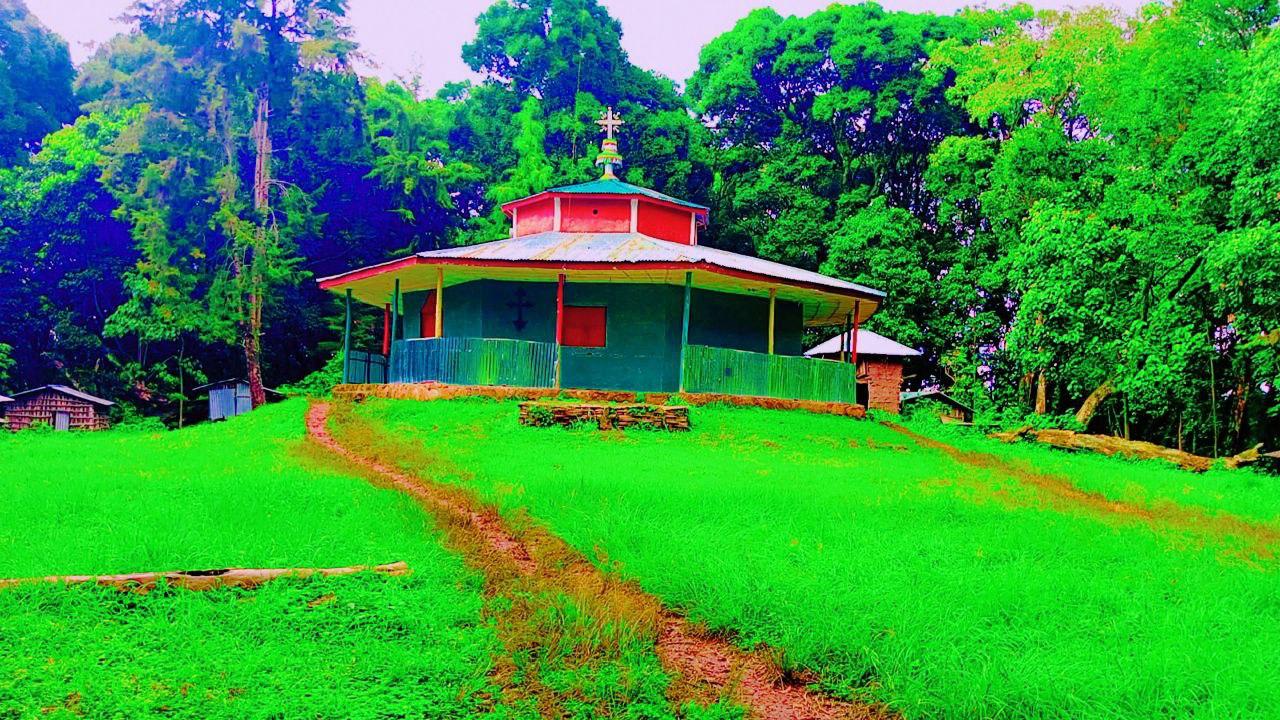
Bulki Debre Ganat Medhane Alem Church
Bulki Debre Genet Medhane Alem Church is an ancient and historic religious institution located in the Gofa Zone. Beyond its spiritual services, this site is a significant cultural heritage monument that serves as a testament to the area’s history, development, and architectural evolution.
- Historical Origin and Landscape
- Geographical Location: The church is situated on a height in the town of Bulki. This location offers a vantage point to appreciate the town’s beauty and the surrounding mountainous landscape.
- Historical Origin: Established in the late 19th century during the reign of Emperor Menelik II, this church highlights Bulki’s strategic role as an administrative center during the expansion of the Ethiopian Orthodox Tewahedo Church into southern Ethiopia.
- Atmosphere: The name “Debre Genet” (Mountain of Paradise) reflects the mountainous beauty of the location, while the ancient cedar trees surrounding the compound imbue the site with a unique majesty and serenity.
- Architecture and Heritage
- Architecture: The church was built following the classic circular architectural design that is a hallmark of the Ethiopian Orthodox Tewahedo Church.
- Historical Artifacts: The site holds ancient parchment manuscripts, gold and silver crosses, and historic gifts (vestments and sacred vessels) donated to former kings and nobles, providing valuable resources for historians.
- Spiritual and Social Significance
- Center of Knowledge: For centuries, the church has served as a hub of education, teaching reading, church chant (Zema), and poetry (Qene), contributing significantly to the development of literacy in the area.
- Cultural Integration: The annual festival held every October 27th (Tikimt 27) is a major social event that attracts numerous pilgrims and visitors from the Gofa Zone and other parts of the country, vibrantly reflecting the local culture and customs.
One-Day Travel Itinerary
- Morning: Depart from Sawla and travel to Bulki town, enjoying the scenic mountain views along the way.
- Midday: Visit the Bulki Debre Genet Medhane Alem Church, review its historical records, and explore nearby attractions and the local community’s way of life.
- Afternoon: Observe the activities in Bulki town, visit the local marketplace, and purchase local products such as high-quality honey and butter.
- Evening: Return to Sawla to conclude the trip.
Essential Tips
- Respect: Visitors are advised to respect religious protocols and observe appropriate dress codes.
- Information: To view internal artifacts or understand the detailed history, it is advisable to contact the church administration.
- Climate: As Bulki is a highland area, the weather is cool; ensure you pack warm clothing.
- Best Time to Visit: Visiting at the end of June or the beginning of July offers a unique opportunity to witness the “Gaze Maskala” celebration (the Gofa New Year).