
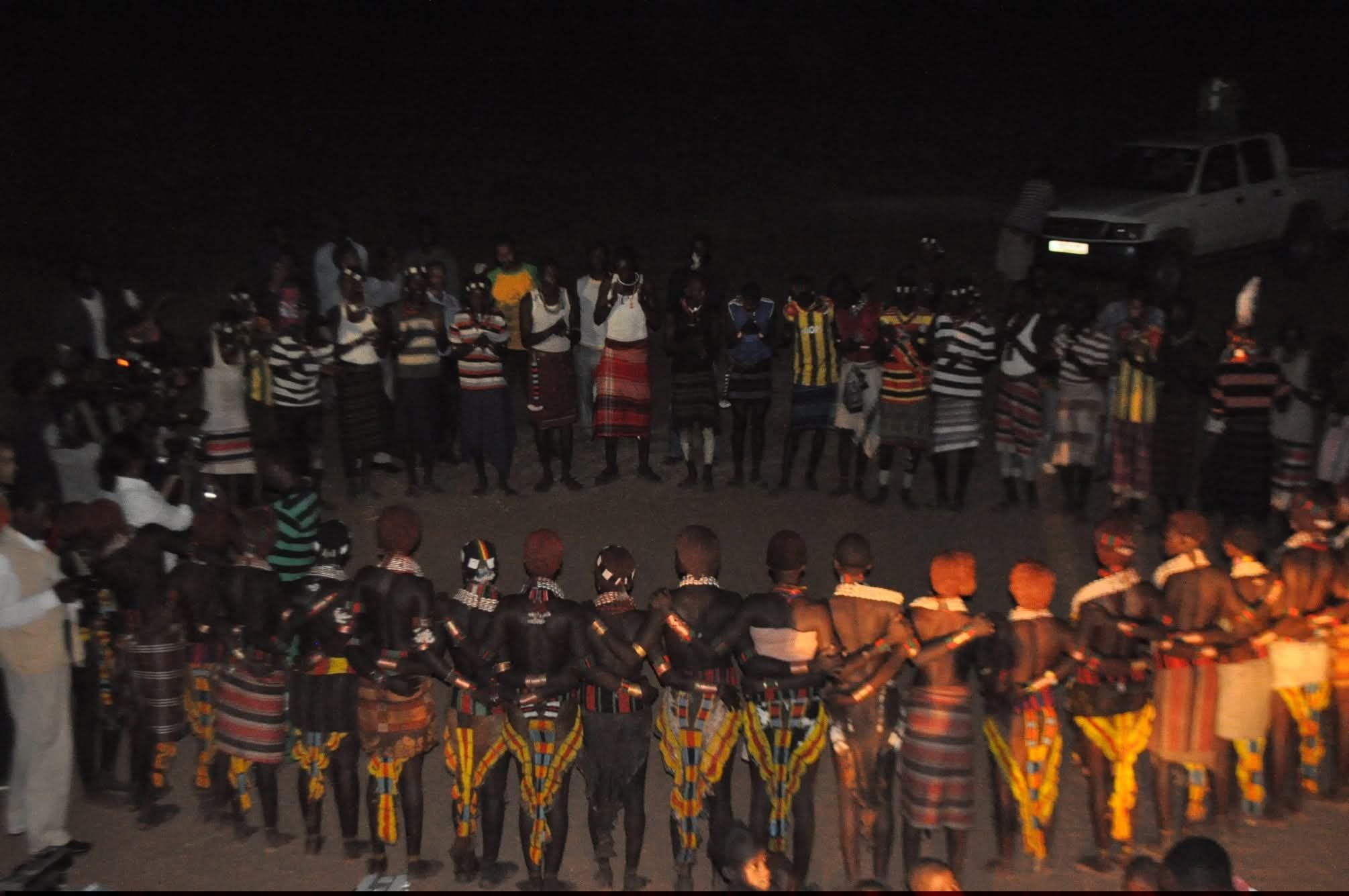
The Hamer “Evangadi” Night Dance
The Hamer people’s “Evangadi” dance is one of the most exciting, joyful, and vibrant cultural events in the South Omo Valley. Performed mainly under the moonlight, this night dance offers a truly magical and unique atmosphere.
Meaning and Purpose of Evangadi
In the Hamer language, “Evangadi” literally means “the collective dance of the youth.” This performance is presented for several key reasons:
- Entertainment: It serves as a social platform for the youth to relax after long days of herding cattle and performing household chores.
- Courtship: It is a traditional way for unmarried young men and women to meet, interact, and select future life partners.
- Celebrating Victory: It is often held to celebrate the successful completion of the Bull Jumping ceremony (a rite of passage).
Setting and Atmosphere
Evangadi has its own unique rituals that set it apart from other dances:
- Timing: The dance begins after sunset and can sometimes last until midnight. It is especially vibrant during a full moon.
- Location: It is usually held in an open space located in the center of the village.
- Rhythm: No musical instruments are used. The rhythm is created solely by the vocal chanting of the youth and rhythmic hand clapping.
Traditional Dance Movement
The dance features diverse and symbolic movements:
- The Leap: The men repeatedly jump upward with great energy. This display of strength and endurance is intended to impress the young women.
- Formation: Men and women stand in opposite rows or form a circle. The movement of men approaching the women while the women playfully retreat is a captivating sight.
- Shoulder to Shoulder: The youth often hold each other shoulder to shoulder, creating a powerful sense of unity and emotional connection.
Attire and Beauty
During Evangadi, the traditional best attire of the youth is highly distinct:
- Girls: Wear traditional goatskin skirts (Kalishi), decorate their hair with a mixture of butter and red ochre, and wear bright beaded jewelry and metal ornaments (Kolcho).
- Men: Often decorate their faces and bodies with white ash or natural clay.
Social Significance
Evangadi holds a significant place in Hamer society. It is a stage where young people showcase their artistic skills and agility. The eye contact and smiles shared during the dance often mark the beginning of romance stories that lead to marriage.
The “Secret” of Evangadi: Why do the men jump so high? In Hamer culture, the higher a young man jumps, the more he is viewed by the women as a strong, healthy, and eligible future husband.
Tips for Visitors
- Participation: The Hamer is very hospitable and may invite you to join the dance. Becoming a participant creates an unforgettable memory.
- Photography: Since it is a night event, camera flashes can disrupt the atmosphere and the participants. Always ask for permission before taking photos and respect local rules.
- Guide and Flashlight: Carry a flashlight (torch) for traveling to the villages at night, and ensure your guide explains the lyrics of the songs, which usually praise beauty, bravery, and cattle.
Itinerary
- Day 1: Jinka – Turmi
- Morning: Drive from Jinka to Turmi via Key Afer.
- Afternoon: Arrive and settle in Turmi. Visit a nearby Hamer village for a traditional coffee ceremony.
- Evening (20:00 – 22:00): Your guide will take you to a village hosting an Evangadi. (Note: The dance does not take place every night, so prior confirmation is required). Upon reaching the village, enjoy the melodic chanting under the moonlight.
- Night: Overnight in Turmi (Buska Lodge or camping).
- Day 2: Turmi Market and Bull Jumping
- Morning: If it is Monday or Tuesday, visit the colorful Turmi market.
- Afternoon: Look for a Bull Jumping ceremony. This is a rite of passage that grants a young man the right to dance Evangadi as a “Maza” (adult).
- Evening: Participate in another Evangadi celebration if available.