
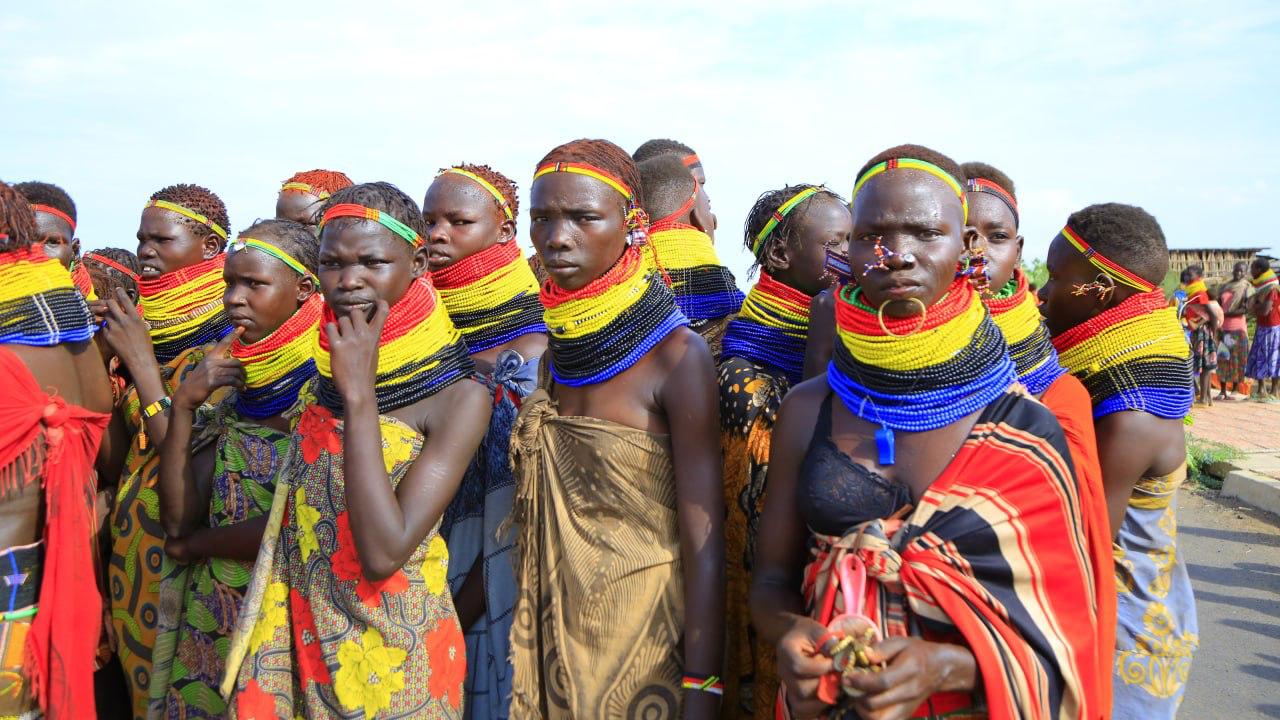
The Nyangatom Traditional Festival (Kangaten)
The Nyangatom people are a strong and brave community living at the southern tip of the Omo Valley, near the border between Ethiopia and South Sudan. Kangaten is their main town and the central hub for their spectacular cultural festivals. The festival celebrated in Kangaten is a grand stage where the community expresses its identity, bravery, and unity.
Meaning and Purpose
This festival is mainly celebrated after a successful harvest or a major collective victory. Its main purposes include:
- Gratitude: Offering sacrifices of thanks to the Creator and nature.
- Peace and Reconciliation: Resolving inter-clan conflicts and declaring peace.
- Honoring Youth: Performing rites of passage for young men transitioning into adulthood.
Main Aspects of the Festival
During the Ateker festival, the entire community displays magnificent cultural artistry:
- Bead Art: Women wear thousands of bright beads around their necks, weighing anywhere from 6 to 8 kilograms. These beads are a symbol of wealth and social status.
- Body Painting: Men apply white ash and clay to their bodies to paint symbols of bravery.
- Lip Ornaments: The use of ivory or metal jewelry pierced through the lower lip gives both men and women a unique and majestic appearance.
Key Activities
- Traditional Dance and Song: It is captivating to watch men and women leaping high in a synchronized dance. Men sing powerful songs reminiscent of their bravery in hunting and the strength of their cattle.
- Animal Sacrifice: Bulls or cows are slaughtered during the event. Elders inspect the blood and fat to predict future peace and rain.
- Stick Fighting Displays: Just like the Mursi, the Nyangatom may display their strength through traditional stick-fighting parades.
Strategic Importance of Ataker
Kangaten, located on the western bank of the Omo River, serves as a center of diplomacy:
- During festivals, relatives from the Turkana (Kenya) and Toposa (South Sudan) tribes often participate, making it a cross-border platform (peace summit) for regional peace.
What makes the Nyangatom unique? Nyangatom men practice scarification on their bodies. These scars are viewed as “medals of honor,” signifying bravery achieved during hunting or community defense.
Essential Tips for Visitors
- Temperature: This is one of the hottest areas in the Omo Valley. Temperatures can reach 35°C to 40°C. Carry plenty of water and light clothing.
- Border Security: As a cross-border community, the area may require holding security clearance (ID indicating your identity). It is often necessary to be accompanied by an armed scout.
- Photography Etiquette: The Nyangatom are very proud people. Always ask for permission before taking photos. They often enjoy seeing their images on the camera screen afterward, so showing them the photos is highly recommended.
- Transportation: Due to the dusty and uneven terrain, a sturdy 4WD vehicle is mandatory.
Itinerary
The Nyangatom villages are located across the Omo River. Due to the high heat, preparation is crucial.
- Day 1: Turmi – Kangaten – Nyangatom Villages – Turmi
- 07:30 AM: Depart from Turmi and head west (around 70 km). Enter Kangaten by crossing the new Omo River Bridge.
- 09:30 AM: Arrive in Kangaten. Visit the local market (especially if it is Wednesday, as it is a vibrant market day).
- 11:00 AM: Proceed to the rural villages. Observe the women’s wonderful beadwork and lower lip piercings. Participate in or watch traditional dances.
- 01:00 PM: Lunch in Kangaten town.
- 03:30 PM: Return to Turmi.
- Evening: Overnight stay in Turmi town (Buska Lodge or similar).
- Day 2: Kangaten – Kibish (For Adventurers Only)
- If you have extra time, you can travel northwest to Kibish, which is on the border between the Nyangatom and Surma peoples. This route is very strenuous and requires full camping gear and advanced preparation.